The Secret of Happiness

My soul will be satisfied as with fat and rich food, and my mouth will praise you with joyful lips, when I remember you upon my bed, and meditate on you in the watches of the night. Psalm 63:4 – 5

It seems that everybody has become interested in the pursuit of happiness lately. Oprah has made an issue of it on her program, Will Smith has done a movie on it, numerous scholarly studies are being done on it and a whole new genre of books on the topic are hitting the shelves, some of them instant bestsellers.

Happiness, of course, is one of the central themes of Scripture. The happiness of the creature, however, is never presented apart from the fullness of the Creator. To put it differently: The Bible presents personal happiness as the primary evidence that the excellence of God has been fully apprehended. God’s perfection is best expressed in man’s delight, for, as John Piper has written, “enjoying God makes him look supremely valuable”.

Happiness, therefore, was never intended as a mere experience for the benefit of the individual. Rather, it should be seen as the heart’s response to the glory of God and so as the primary testimony of God’s greatness. The experience of fullness and contentment so desperately sought by the world can never be found apart from the fullness and contentment that exists in God alone. The supreme worth of God is what causes satisfaction in the heart of a person, and nothing else.

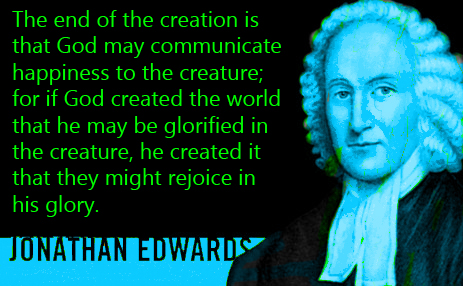
As Jonathan Edwards wrote three centuries ago: “The end of the creation is that God may communicate happiness to the creature; for if God created the world that he may be glorified in the creature, he created it that they might rejoice in his glory.”
Reductionism in the Ecclesia

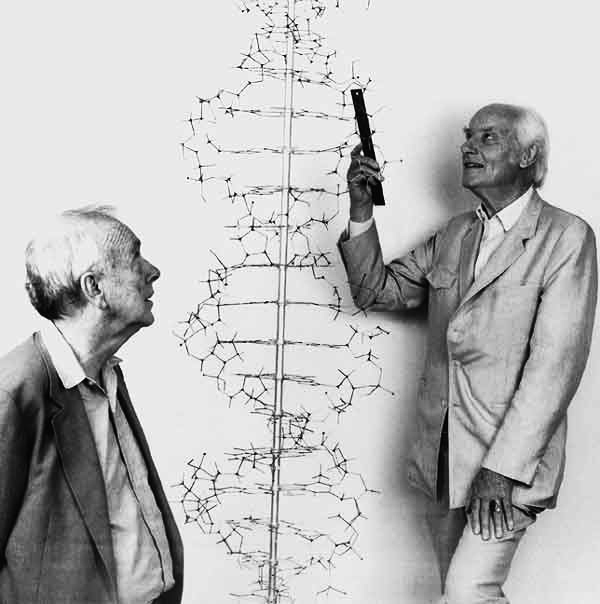
Francis Crick, co-discoverer of the DNA structure, concluded in the light of his findings that a human being is “nothing but a pack of neurons” and “no more than the behaviour of a vast assembly of nerve cells and their associated molecules.”

This philosophy is called reductionism and is based on the theory that we can best understand complex systems by reducing them to small parts. By doing so the underlying structure is revealed, and the whole system is then interpreted and labeled accordingly. The whole is never more than the sum of the parts, in other words.

This approach may work in a science lab, but it can never be indiscriminately applied to the study of human beings. When researchers do so they inevitably reduce people with personal histories, feelings and hopes to the status of organisms under a microscope – on the same level as Pasteur’s bacteria – oftentimes concluding that we are no more than advanced animals or complicated machines.

The threat also exists in the church. Christians fall into this trap when they use particular theological systems or moral paradigms as their criteria for classifying, labeling and stereotyping others. This is nothing but a theological variety of reductionism, as it reduces a fellow human being to a mere set of beliefs, a compilation of dogmas or a series of sinful actions.

Jesus Christ never defined people in this way. Scripture makes it clear that he always saw and treated people as unique individuals: Nicodemus was more than a Pharisee, Mary was more than a prostitute, Zacchaeus was more than a tax collector, and so on.

There is a marvelous lesson to be learned here: To stand against moral decay and theological liberalism may never cause us to deny the humanity of those who have become victims thereof.

The Medium is the Message

“Do not do what they do, for they do not practise what they preach.” Matthew 23:3

Some of us will remember Marshall McLuhan as the Canadian professor from the sixties who coined the term “the global village.” Yet MacLuhan gained recognition and became famous for another of his aphorisms, namely “the medium is the message”.

According to McLuhan, any chosen medium selected for the purposes of communication serves not only as a carrier for such communication, but actually determines the content of the communication. For instance, American Indians may communicate by using smoke signals, but they will never be able to discuss deep philosophy this way. The form of communication does not allow for the content.

This principle becomes especially relevant when we consider that Christians are called “living epistles” in the New Testament. We are, in other words, mediums or carriers of God’s communication. Taking McLuhan’s principle into consideration, we can safely assume that our message is determined not only by its content, but first and foremost by us, its preachers. Who we are and what we do will determine the effect our speech will have on our listeners.

Actions, therefore, speak much louder than words. I am reminded of Oscar Wilde who is rumoured to have said to someone: “Who you are speaks so loud that I cannot hear what you are saying.” Some of the saints have said: “Preach the gospel at all times. If necessary, use words.”

The apostle Peter wrote along the same lines: “Live such good lives among the pagans that, though they accuse you of doing wrong, they may see your good deeds and glorify God on the day he visits us.”

Let us be challenged to become not only hearers and proclaimers, but also doers of God’s word.

Witness Lee: We Were Wrong

It took a lot of courage, but after an intense six year investigation the world’s most respected counter-cult organization, the Christian Research Institute (CRI), issued an apology under the heading: “We Were Wrong.”

President Hank Hanegraaff summarized the findings of his organisation’s research in a 50 page treatment of the matter (Christian Research Journal, Issue 32-06. See http://journal.equip.org/articles/we-were-wrong). Under scrutiny was a movement simply known as the “local churches” (without capitilisation), associated with the work of the Chinese Christian Witness Lee, who worked with and under the direction of the legendary Chinese martyr Watchman Nee.

Nee sent Lee to Taiwan in the late 1940’s to expand the work there, and was imprisoned for his faith soon after. Lee carried on with the work, which experienced tremendous growth under his leadership, and took it to the United States in the 1960’s. Today there are thousands of local churches worldwide.

For years many churches in the West called Lee’s work sectarian and even cultic, hence the investigation by CRI. Some of the accusations against Lee included anti-Trinitarian views and the “deification” of man, but both were refuted by the investigation.

The real unhappiness, it would appear, stems from Nee and Lee’s teaching that denominationalism is sinful and divides the one body of Christ. As with the churches in the Bible, each town or city should have only one local church, named according to location (e.g. The Church in Bloemfontein), even if they meet in different venues for practical purposes. Nee was so slandered for his criticism of denominational division that he once wrote “The Watchman Nee portrayed by them I would also condemn.” And Lee is still called a heretic by thousands, in spite of CRI’s findings.

Cultic? Perhaps we should not shoot the messenger because we do not like the message.

Detecting Evil

The problem of evil has confounded philosophers since time immemorial. One would think that our age’s rationalistic bent and tendency to steer clear of moral judgments have finally led us to abandon this concept, shelving it together with everything else that our enlightened Western minds find hard to believe in, such as the virgin birth, the miracles of Christ, the resurrection and the tooth fairy.

Yet, unlike the above, the problem of evil stubbornly refuses to be denied. Kosovo, Cambodia and Nazi Germany serve as grim reminders, to name but a few.

One person who found that he could no longer deny the facts is noted psychiatrist and personality expert Dr. Michael H. Stone from Columbia University. Some time ago a New York Times article reported that Stone is now urging psychiatrists and forensic specialists “not to avoid thinking of the term evil when appraising certain offenders.” It is time, Stone said, to give their behaviour the “proper appellation.” According to the article Stone drew his conclusions after years of research and having examined hundreds of killers.

The same article quotes another scholar and professor of psychiatry, Dr. Robert Simon from Georgetown Medical School, as saying: “Evil is endemic, it’s constant, it is a potential in all of us. Just about everyone has committed evil acts.” Simon recently published his own findings in a book with the telling title “Bad Men Do What Good Men Dream.”

When we can no longer deny the reality of evil in our world, perhaps we shall find reason to reconsider the reality of the cross. The cross is God’s response to the problem of human evil and sin, and no less a myth or invention. When we come to terms with the problem, it should only follow naturally that we come to terms with the solution.

The Power of Grace

Shall we go on sinning that grace may increase? May it never be! Romans 6:1

The man who wrote most of the New Testament had to defend the notion that his radical message of grace could give people an excuse for sinning. That says something about just how extreme Paul sounded to some of his hearers. It also tells you what you can expect if you preach grace as shamelessly as Paul did.

Grace does not lead people into sin, Paul says. On the contrary, it leads them out. But it has to be true grace, not the cheap counterfeit that masquerades as God’s forgiveness. False grace is what Satan offered Eve when he told her that she can sin, and that everything will be all right. It’s what Esau relied on when he sold his birthright and thought he could get it back. It’s what Saul had in mind when he disobeyed God and expected to be excused because of his intention to sacrifice later. False grace is a deception, a sanctified justification, a fake alibi.

True grace does not provide an excuse for sinning, but a motive for never sinning again. Read the rest of Romans 6 and see Paul’s reasoning: Christ did not only die for us. We died with him. No one can receive God’s grace without becoming a new creation in the process. God’s grace does not only pardon sin. It transforms the sinner. People who have encountered it are changed people. God’s will is no longer something they have to do. Rather, it is something they want to do.

There is only one legitimate motivation for obeying God, and it is not fear or legalism. It is the very motivation that characterises the new creation in Christ, and that refutes the notion that grace may lead us into sin. In the words of none other than Jesus Christ himself: “If you love me, you will obey my commandments.”

Why We Have the Poor

“You will always have the poor among you…” John 12:8

Why?

The answer may be simpler than what we think. God has a strange habit of coming to us in disguise, and He does it for a very specific reason. Only those who have “eyes to see” and “ears to hear” can comprehend Him. They are the ones who do not see an ordinary carpenter from a middle-class home, but the King of Kings and Lord of Lords posing as one. They do not see a field, but a hidden treasure. They do not hear senseless parables, but coded messages from another world. They do not see a human being as a “pack of neurons” or a “vast assembly of nerve cells and their associated molecules” (as Francis Crick, codiscoverer of the structure of DNA, describes us), but as a spirit being created in the image and likeness of God. They do not judge by “mere appearances” (as Christ accused the Pharisees of doing in John 7:24), but by that which lies beyond appearance. In short, they possess the mystery of faith: The ability to see the unseen, and to think and live accordingly.

I suspect that is why we have the poor. They are in our midst as a modern parable, and the way we treat them is an indication of our ability to discern spiritual reality, to see beyond the veil. Matthew’s gospel tells us that on the Day of Judgment the poor man will take off his disguise, reveal himself as Jesus, and then judge us based on how we treated him on earth. Of course this does not mean that we will be saved by our humanitarian efforts, but that the true saving grace of God manifests itself in the grace we show others. Those who have received freely will give freely.

And so the way we treat the poor is an indication of our love for God, and the degree to which we have come to terms with his love for us. How badly we need such an indication, not on the day of judgment, but well ahead of time!

The Mark of a Good Book

My dad was a very wise man who taught me a number of unforgettable lessons. One that stands out is “If you want people to believe a lie, print it!”

I have seen the truth of these words confirmed again and again. Books have an air of authority around them, which explains why people are oftentimes disappointed when meeting an author.

In reality there is no difference between the authority of the printed and spoken word, no matter how popular the former may be. As Robert Boston has wisely pointed out: “How a book sells is not an indication of its merit. The … public has a seemingly bottomless appetite for nonsense, as evidenced by the countless tomes about astrology, aliens from outer space, quack diets, and UFOs that have regularly graced best-seller lists over the years. Some books that sold millions have later been exposed as hoaxes. A slot on the best-seller list tells you exactly one thing about a book: that a lot of people bought it.”

The same goes for Christian books. In fact, a Christian book’s fame may oftentimes be an indication of its shallowness (The road leading to perdition is broad, remember?). A Christian bestseller list is an indication of a book’s popularity, never of its theological soundness.

The single most important criteria for judging a Christian book is never its popularity, relevance, practical usefulness or readability. Rather, it is the degree to which the centrality of Jesus Christ dominates the book.

That may sound a bit abstract, so let me assist by listing a group of Christian authors whose books fall into this category (There are many more): Andrew Murray, Watchman Nee, A.W. Tozer, Dietrich Bonnhoeffer, Major Ian Thomas, T. Austin Sparks, Jessie Penn Lewis, Oswald Chambers.

Start reading these authors and you will know exactly what I mean.

Steve Jobs And Eternity

The poor man died and was carried by the angels to Abraham’s side. The rich man also died and was buried, and in Hades, being in torment, he lifted up his eyes and saw Abraham far off and Lazarus at his side. Luke 16:22-23

Apple’s CEO Steve Jobs is estimated to be worth about 6 billion US dollars. This makes him one of the richest people in the world. Jobs is the co-founder of both Apple and Pixar (the studio who brought us the Toy Story movies) and, as a result of the latter, The Walt Disney’s Company’s largest single shareholder. He has (quite understandably) been named the CEO of the decade by Fortune Magazine.

A truly successful man by all measures. And enviable. In a 2009 survey he was selected the most admired entrepreneur among teenagers. Everybody wants to be like Steve, it seems.

Until now. Jobs announced this week he is resigning as CEO from his company, and the reasons are well known. He has been battling with pancreatic cancer for some time. The announcement caused Apple stocks to plummet and many to wonder if his successor will be able to fill his shoes.

In the face of death we have a tendency to reevaluate things. I suspect Steve would be happy to rid himself of all his possessions (and fame) if he could be given immortality in return. The point is: If he fails to find it, then in the bigger scheme of things, the one who does find it will be a much greater success than he, even if such a one has lived his or her earthly life as a beggar in the slums of Calcutta.

That is exactly the point of Christ’s well known story from which the above verses come. And it raises a question: How do you define success?

(This is an update of a column that appeared in Bloemnews earlier this year when Steve Jobs took indefinite medical leave)

The Gift of Knowing

Jesus declared, “I thank you, Father, Lord of heaven and earth, that you have hidden these things from the wise and understanding and revealed them to little children; yes, Father, for such was your gracious will. Matthew 11:25-26

Knowledge, according to a popular dictionary definition, is the “acquaintance with facts, truths, or principles, as from study or investigation.” These last two words indicate the conditions for knowledge, and so the one who wishes to acquire knowledge is assumed to be a “student” or “investigator”. In other words, the responsibility for acquiring knowledge lies with the one who wishes to know.

Some people, of course, are better students than others. They have higher IQs, are wiser than their peers and are generally better and faster at understanding concepts. Many of them become professional students, that is, full time researchers who get paid to share their ever-increasing knowledge with lesser-enlightened souls.

But suppose the acquisition of knowledge did not depend on the knower but on the object of knowledge. And suppose the object of knowledge allowed itself to be known by using criteria that had little to do with study or investigation. If that were the case the wise and understanding would loose their advantage. And those who qualify according to the different criteria would gain it.

It’s a strange idea, isn’t it? Yet that is exactly what the Bible teaches. Knowing God does not depend on our wisdom or understanding, but on God making himself known. This “revelation” comes to children, which suggests that the condition for receiving it has more to do with dependence, vulnerability and sincerity than an abundance of grey matter.

That explains why someone like famous atheist Christopher Hitchens, who has been voted the “world’s fifth top public intellectual”, has not been assisted by his formidable intellect to discover a single thing about God.