The Art of Reflection

Consider what I say, and the Lord will give you understanding in all things. 2 Timothy 2:7

According to communication theorists the process of communication consists of three elements: A Sender (encoder), a message (code) and a receiver (decoder). According to the apostle Paul, spiritual communication contains a fourth element: Understanding given by the Lord.

There is a condition, however. The hearer needs to “consider” or, as some translations put it, “think about” the message. Only then will the insight come.

The implications of this verse are quite astounding. Paul is, in fact, prescribing a profound spiritual discipline to the church of Jesus Christ. The Greek word for “consider” literally means “to exercise the mind”. Understanding the Word of God is the conclusion of a deep and serious meditative process, in other words.

The New Testament uses the metaphors of meat and milk to distinguish between the nutrition of mature and immature Christians. When we consider that one of the primary differences between drinking milk and eating meat has to do with the respective digestive processes associated with it, Paul’s advice makes a lot of sense. Milk requires no digestion as it is pre-digested. For meat to be absorbed, however, it needs to be broken down by the body, and this takes time. It is therefore not farfetched to suspect that one of the fundamental differences between the mature and the immature believer lies in their ability, or inability, to digest the meat of the word – to consider, think about and meditate on it.

We are a culture who has lost their ability to reflect, many believe. We prefer soap operas, not Shakespeare. If this is true, then Paul’s challenge is all the more relevant.

Vital Organs

God has so composed the body, giving greater honor to the part that lacked it, that there may be no division in the body, but that the members may have the same care for one another. 1 Corinthians 12:23-25

Some time ago I was sipping hot coffee at a great restaurant in Johannesburg, when I found myself staring at the scene in this picture. I was amused and took a photo, certain that I would be able to use it to make some or other point in a teaching or article.

Well, the opportunity has arisen. A few weeks ago I read the well known words above, from Paul’s first letter to the believers in Corinth, and it ministered to me in an incredible way. It was clearer than ever, a perfect answer to a question that everybody (believers and non-believers alike) have been asking for at least seventeen centuries: Why are Christians so divided?

The passage above, I believe, provides the key.

But before we get there, consider for a moment the implications of this sentence: “God has … that there may be no division in the body…” That’s quite a statement. God has done something to prevent disunity in the body. There is a “secret” to Christian unity, and the verse above fills in the blanks and reveals exactly what it is.

Paul begins his argument in the preceding verses. We treat our “unpresentable parts” with “greater modesty”, he says. That is where my picture comes in. We buy clothes to hide our bulging waistlines. We colour our greying hair. We are attracted to the services offered in the picture, and the reason is obvious: We spend time, energy and money on our unattractive parts, not the attractive parts. In short: We adore the unadorable.

In the same way, Paul says, God gives “greater honour” to the parts that lack it, and so makes them indispensable to the body.

Before we speak about the body of Christ, which is what Paul has in mind here, let us pause for a moment and consider how true this principle is in the human body. I have never seen a pair of kidneys on the cover of Cosmopolitan magazine, and I certainly do not ever expect to. Kidneys are not exactly… attractive. However, to compensate for this fact they have been given a function that is so incredibly essential to the health of your body that it has earned them the proud title of “vital organs.” And so that magnificent face of yours simply cannot expel them from the body, or look down on them, or say to them “I don’t need you.” In fact, one of the things that causes a healthy complexion is a well functioning pair of kidneys.

Which brings us to the body of Christ. The very same principle applies here. Note that God has “chosen the poor in this world to be rich in faith” (James 2:5). Also not that the “lowly brother” must “boast in his exaltation” (James 1:9). As Paul said to these Corinthians earlier on in the same letter, God chooses the foolish, weak, low and despised in this world.

Hmm. I am reminded of Kierkegaard who said that God always creates out of nothing, and that he can only use something after he has reduced it to nothing. This explains why Jesus Christ made himself nothing before he could be used by God. It also explains why things went terribly wrong for the great visionaries of the Bible before their so-called “sense of destiny” could find fulfillment. Think of Joseph, Moses and Peter, to mention a few. All of them were aware of a calling, and all of them had to lose it in order to find it.

Most of us are more or less aware of the Biblical pattern in this regard. Most of us know that the way to the promised land lies through the wilderness, that the cross precedes the glory, that brokenness is a prerequisite for service. But the verse above adds an important dimension to this principle. God empowers the weak for another reason besides the obvious ones that we are so aware of.

HE DOES IT TO MAKE THEM INDISPENSABLE TO THE BODY.

People who are insignificant according to the standards of the world are indispensable in the ekklesia of Jesus Christ. Their extraordinary gifts are crucial for the church’s health. She needs to be aware of this, protect them and care for them. The foolish, weak, low and despised in this world are the vital organs of Christ’s body. It is as simple as that.

I say this to my shame, but there was a time in my life when I turned my back on my brothers and sisters in Christ who did not see things the way I did. I became sick of their theological shallowness, their constant emphasis on experience and emotions, their hyped-up gatherings. At least that is how I experienced it. And so I turned my back on them and searched out likeminded spirits with whom I could discuss the books, authors and issues that interested me. It did not take long to find them, and when I did I rejoiced. We could be deep together. Really, really deep. So deep, in fact, that no else could find us. Except of course those gifted souls who were just as deep as we were…

I see things differently nowadays. Besides being obviously embarrassed by the pharisaical snobbishness that I had made myself guilty of, I have come to realise how incredibly shallow my so-called depth has been. Whilst my new friends and I had a roaring time debating things like supralapsarianism, we were missing out on a vitality that could only be provided by certain … organs. We simply did not have the fervour to save the lost that I had seen in that tent evangelist who could hardly spell his name. We did not have the compassion on the poor that I had seen in the theologian with the “mystical” tendencies. And so on.

Don’t get me wrong. I am not arguing for some happy ecumenism at the expense of Biblical truth. I am merely saying that different parts of the body have different functions, and that all of us run the risk of becoming severely deformed without the restraint provided by the unity of the body. We need one another. The thinkers need the doers who need the feelers who need the thinkers…

John Ruskin once said “When a man is wrapped up in himself, he makes a pretty small package.” I wish to edit that statement somewhat: When a man wraps up Jesus Christ with himself, he ends up with a pretty small Jesus.

The body is not an eye, or a collection of eyes. It is a body. One body with many parts, as Paul said to the Corinthians. One body with all its parts, for God has clothed the dishonourable parts with greater honour so as to make them indispensable.

The key to Christian unity is diversity. Ironically, we have allowed our differences to drive us apart instead of bringing us together.

(A shortened version of this article appeared in Bloemnews.)

Love Story

I have this against you, that you have abandoned your first love. Revelation 2:4

The above sentence is best understood when read in the light of Revelation’s last few chapters. There the church is revealed as “a bride adorned for her husband” who has made herself ready for “the marriage supper of the Lamb”.

The Bible is a story about a Bridegroom and his bride.

The imagery of this divine union is found early in Genesis, and it reaches its climax in the last chapters of Revelation. In Genesis we read about the union of the first Adam and his bride, in Revelation we read about the union of the Last Adam and his bride.

Everything in between is a commentary on this divine romance, a glorious love story of love lost and found.

Humans are obsessed with this story, even if they won’t acknowledge it. Our movies and books are filled with it: Boy meets girl, fall in love, split up and reunite. And then they live happily ever after. This is the grand narrative of the ages. This gospel is written on our hearts, and it is a tragedy if we fail to make the link between this deep intuition, this overriding passion, and our “Christian theology.”

I always marvel how easy it is for new believers to grasp the above. Their love affair with their Lord is plain to see. They are dizzy with joy and oblivious to the call of all other lovers. For them, Jesus Christ is all.

Unfortunately, the passion of the heart tends to become the knowledge of the head after a while, and then “first love” fades away like morning mist.

Love for God was never intended to be temporary. It is freely given at first, but it requires careful cultivation to become permanent.

When Men Create Gods

Claiming to be wise, they became fools, and exchanged the glory of the immortal God for images resembling mortal man… “ Romans 1:22-23

Man is certainly stark mad; he cannot make a maggot, and yet he makes gods by the dozens. – Michel de Montaigne

The term “idol worship” oftentimes conjures up images of scantily dressed jungle dwellers with bones through their noses bowing before some crudely shaped god carved out of wood or stone. And so, frequently, the degree to which people see themselves as “civilised” happens to be the very degree to which they think they are immune to idolatry.

Nothing could be further from the truth. An idol is best defined as a “God substitute”, that is, an image that is derived from a human understanding of God instead of a divine revelation from God. Such an image may indeed be carved out of wood or stone, but mostly it is constructed in the mind.

God created human beings in his image. Idolatry takes place when human beings create a god in their image. Idolatry, therefore, is nothing but a reversal of God’s natural order of creation, as is evident from the verse above. True Christianity is when we resemble God. Idolatry is when he resembles us.

This means that all of us are candidates for idol worship. We merely need to use our human understanding as a basis for our god-ideas to qualify. We then become like the triangles who concluded that they cannot say much about God accept that he’s obviously got three sides.

There is no need for such idolatrous speculation. The lost image of God is restored through Jesus Chris. He is “the image of the invisible God, the firstborn of all creation” (Colossians 1:15), and so we can know God through him.

Eros: The Love that Seeks a Reward

A new command I give you: Love one another. As I have loved you, so you must love one another. John 13:34

The ancient world was no stranger to the idea of love. Love for friends, women and God were the great themes that inspired the early poets and orators. Particularly the Greeks made much of love, and many regard Plato as the all-time greatest expositor of the love theme.

In the midst of this world Jesus Christ comes along and speaks of the ‘new command’ to love. What on earth could he have meant?

We merely need to compare the love of Plato with the love of Christ to find the answer. Plato chose the Greek word Eros for his definition of love. The word implies sensual love. Eros is the enchanting experience of being drawn to a person or object that holds the promise of fulfilling or satisfying you in some way. Eros is always motivated by reward, and as such always egocentric. It is the desire, urge and impulse to actualise and authenticate the self, and its excitement is derived from the people, instruments and gods who can assist with the journey. Eros is equally at home in worlds as far apart as romance, business, politics and religion. Indeed, it can be said that Eros provides the fuel for the rat race.

Christ chose another Greek word for love: Agape. Agape is the love of God, which means it is a love which seeks nothing, because it already has all things. Agape springs forth from a position of utter contentment, and so it seeks no compensation or reward. It is free and unconditional, and seeks to create value instead of demanding it.

Clearly, only those who find all their satisfaction in Christ can love in this way.

How to Conquer Desire

My feet had almost stumbled, my steps had nearly slipped. For I was envious of the arrogant when I saw the prosperity of the wicked… Whom have I in heaven but you? And there is nothing on earth that I desire besides you. Psalm 73:2-3, 25

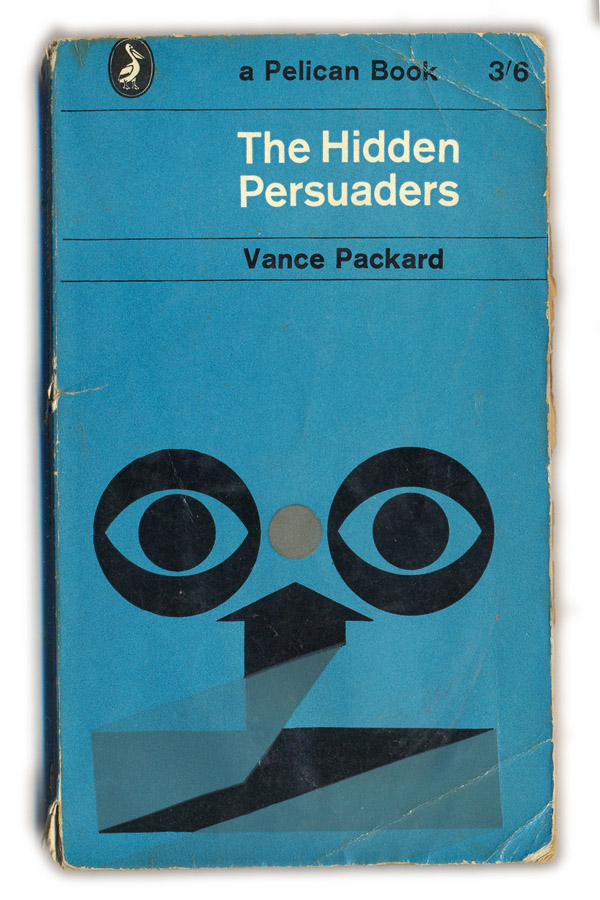
In The Hidden Persuaders author and social critic Vance Packard quotes an American advertising executive as saying ‘What makes this country great is the creation of wants and desires, the creation of dissatisfaction with the old and outmoded’. In the same paragraph Packard says that merchandisers of products are being urged to become ‘merchants of discontent’.

That was 1957. Packard’s book, which was a critique of consumer motivational research and manipulative techniques used by advertisers to create desire for products, became a bestseller and proved itself prophetic in many aspects.

More than two millennia earlier Asaph wrote a Psalm in which he tells of his own temptation to become discontented with his lot and desirous of others’ possessions. Dissatisfaction and envy, it seems, are as old as the human race. The wise Solomon once said that ‘all toil and all skill in work come from a man’s envy of his neighbor.’

How does a Christian overcome this universal temptation to break the tenth commandment? One could remove the object of temptation as they did in the Himalayan Kingdom of Bhutan, where the Buddhist authorities banned advertising. If you remove the source of envy, they say, you also remove unhappy and resentful feelings about others’ possessions.

Aspah, however, overcame his temptation in another way. At the end of the Psalm he tells us that he found his satisfaction in God and, as a result, no longer desired the things on earth. This is the Biblical way: Not obliterating desire, but changing the object of desire.

Broken Windows and Mimetic Desire

You shall not covet your neighbor’s house. You shall not covet your neighbor’s wife, nor his manservant, nor his maidservant, nor his ox, nor his donkey, nor anything that is your neighbor’s. Exodus 20:17

A fascinating study done by Dutch scholar and author Kees Keizer was widely reported on in the media recently. Keizer’s experiments confirmed the basic thesis of the so-called “Broken Windows Theory”, namely that petty crime and lawlessness are encouraged by urban disorder such as graffiti, broken windows and rubbish in the streets.

In one of Keizer’s studies 33 percent of bicycle riders littered an alley with flyers they found on their bicycles handlebars. However, after the alley wall was covered with graffiti, 69 percent of riders littered the alley with the flyers. As Keizer points out: Trespassing, littering and petty theft increase where there is visible evidence that others are ignoring the rules. The incentive to act in the appropriate way is drastically reduced when others behave inappropriately, which is why some have dubbed the theory “Monkey See Monkey Do”.

The tenth commandment is famous for its prohibition of covetousness, but implicit in it is another prohibition: Thou shalt not let your neighbour set the standard for your life. Think about it: Coveting your neighbours’ goods is in essence nothing but a mimicking act, a subtle admission that you do not have a life of your own. It is symptomatic of the herd mentality that characterises the broad road of life and in sharp contrast with the requirements for true discipleship, namely to go against the tide in obedience to Christ.

The narrow road, I once heard a preacher say, is the white line in the middle of a traffic-filled broad road that runs in one direction only. This thin white line, however, runs the other way.

The Violence of Desire

What causes quarrels and what causes fights among you? Is it not this, that your passions are at war within you? You desire and do not have, so you murder. You covet and cannot obtain, so you fight and quarrel. James 4:1

Scholars have long debated why human beings are so predisposed to violence. The history of humanity and the history of war is the same thing, people often say. Why? What lies behind the conflict that has plagued humanity since their expulsion from Eden?

Whilst words like aggression, exploitation and poverty are often used when discussing the roots of violence, some scholars see these factors as part of the problem and not part of the cause. One of them is the French philosopher René Girard. According to Girard much of human behavior is based on imitation and rivalry. Put simply: We think other people are happier than us and conclude this is so because they have things that we do not have. We then want these things and so a process of imitation or “mimicry” is initiated, aptly called “mimetic desire” by Girard (definitely worth Googling). Ultimately, when there are more people than objects of desire the only way to get what we want (and become happy in the process) is to be first in line. That, of course, is when the violence breaks out.

I think Girard is spot-on. I have witnessed a violent fist fight at a clothing sale. I have seen the riot police in downtown Pretoria restraining a huge, mad crowd who were trying to force themselves into a small shop that offered crazy bargains to the first few customers. I have seen these and countless similar displays of Girard’s theory in action.

The answer to all the craziness? According to the rest of the passage in James: Simple, selfless prayer.

Faith in Faith

A friend… said, “You were healed by faith.” “Oh, no,” I said, “I was healed by Christ.” What is the difference? There is a great difference. There came a time when even faith seemed to come between me and Jesus. I thought I should have to work up the faith, so I laboured to get the faith. At last I thought I had it; that if I put my whole weight upon it, it would hold. I said, when I thought I had got the faith, “Heal me.” I was trusting in myself, in my own heart, in my own faith. I was asking the Lord to do something for me because of something in me, not because of something in Him. A. B. Simpson (Canadian preacher, theologian, author, and founder of The Christian and Missionary Alliance)

Now faith is being sure of what we hope for and certain of what we do not see. Hebrews 11:1

I have yet to meet a Christian who does not agree with the above verse. It is, in fact, the archetypical and classic Biblical definition of faith, and Christians right across the globe regard it as such.

Sadly, not everyone agrees on the meaning of these words. I was recently reminded of this when told of a well meaning Christian who blamed the cause of an elderly person’s sickness on her lack of faith. She did not understand the formula of faith, it seems. If only she could be certain of her unseen healing, if only she could be sure of the healing she hoped for, God would raise her up.

It seems we have to choose between a ‘faith in faith’ and a ‘faith in God’ approach when reading Hebrews 11.

Having faith in faith could be described as having faith in one’s own ability to believe, in the potential unleashed thereby, and in the outcome of your wishes. Faith, according to this thinking, is an impersonal force operating in line with universal principles quite independent of the practitioner’s religious beliefs. For this reason, religious systems as diverse as Shamanism, New Thought metaphysics, various branches of Occultism and certain streams of modern Christianity, as well as much contemporary motivational theory, are characterized by it.

Having faith in God is quite different. According to this view, the ‘unseen’ refers to the sovereign God Himself, and ‘what we hope for’ to an eternal reward, or ‘heavenly country’ (verse16). This is confirmed by the fact that none of the faith-heroes of Hebrews 11 ‘received what had been promised’ whilst on earth (verse 39), and neither shall we (verse 40). The focus is clearly on God’s ability, God’s wishes and God’s kingdom, not ours.

These two types of faith are so far apart that they cannot be reconciled. I think I shall settle for the latter interpretation. How about you?

Blessed are the Balanced

One of the best definitions I have heard of “the straight and the narrow road” is that it is the extremely thin line that runs between extreme viewpoints. These words remind me of a friend who once said to me that his favourite Bible verse is “Blessed are the balanced.”

Most theological disputes throughout the centuries have missed the fine line of balance. As Luther said, we are like a drunken man who falls off his horse, gets back on the saddle and then falls off the other side.

When it comes to the place and purpose of miracles, signs and wonders in the life of the Christian, this has especially been the case. In this regard the history of the church is reminiscent of a pendulum-driven cuckoo clock, with each “Tick” representing dead formalism and antagonism towards anything supernatural (the so-called Cessationist view or “streepteologie”) and each “Tock” representing a frenzied fanaticism and conviction that the church must experience the same intensity of supernatural phenomena that marked the ministry of Jesus Christ.

Both views have led to tragedy and tears. Tick: My faith is a mere cognitive affair. I cannot expect God to powerfully intervene in my life, heal my child, deliver my alcoholic husband, and so on. Tock: God is under an obligation to heal people. If he doesn’t, then it’s because they don’t have enough faith.

And so the clock has been ticking through the ages. As a policeman once said to me: The surest way to cause an accident is to over-steer when trying to avoid danger.

God is as alive as he was during the apostolic era. He is a miracle working God who heals, delivers and provides. But let us not try and box him with our formulas and stage shows.