A Bubble of Covetousness

“You shall not covet your neighbour’s house…” Exodus 20:17

The past week’s international news headlines were dominated (yet again) by the current global financial crisis.

This time it is the Spanish economy that is wobbling. Whilst many are hoping that a massive bank bailout will resolve the problem, an increasing number of economists are warning that it won’t. They are predicting a “broader Eurozone catastrophe.”

That sounds rather grim, and so many people are asking the obvious question: “How did we get into this mess?” Google an answer and you will be overwhelmed by an array of articles filled with highfalutin economic terms that are pretty incomprehensible to Joe Soap and his family.

But there is something that you may notice while you’re at it: The recurrence of the term “housing bubble”.

It would appear that an inordinate amount of people bought an inordinate amount of houses with money that they never had but manage to borrow from banks who had inordinately liberal underwriting standards, causing real estate value to skyrocket in an inordinate way.

You don’t need to be an astronaut to understand why the whole thing was destined to pop.

This brings us to another question: Why on earth would anybody with a sound mind want to get involved in this? (Keep in mind that you will have to explain to your grandchildren why you helped destroy the world economy.)

The answer is simple: We never thought that God was serious when he told us not to lust after our neighbour’s house. And so we wanted bigger and better than the Joneses, and used every opportunity to get it.

Of course that made Mr & Mrs Jones feel terrible, and so they had to catch up.

We got into this mess because of greed. That’s the correct answer.

Will we get out of it? God alone knows. So let us focus on what we do know: That the Biblical definition of “gain“ is contentment, not accumulation.

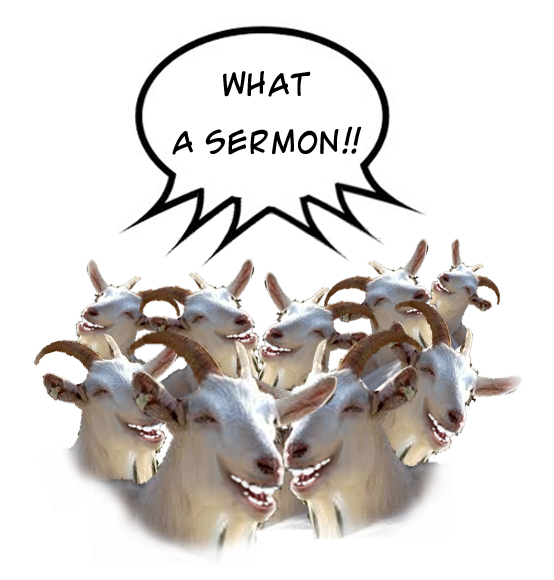
Amusing Goats 101

Charles Spurgeon, the great English preacher, was a rather outspoken man. He did not flinch when it came to addressing error in the churches of his day, and so much of his ministry was marked with controversy. Not everyone appreciated Charles’ straightforwardness.

Spurgeon is especially remembered for his statement that ministers are called to feed the sheep and not to amuse the goats. In an article bearing this title he writes: “The devil has seldom done a more clever thing, than hinting to the Church that part of their mission is to provide entertainment for the people, with a view to winning them… My first contention is that providing amusement for the people is nowhere spoken of in the Scriptures as a function of the Church. If it is a Christian work why did not Christ speak of it? “Go into all the world and preach the gospel to every creature, and provide amusement for those who do not relish the gospel.” No such words, however, are to be found.”

In his remarkable book The Messenger of the Cross, the Chinese Christian Watchman Nee writes along similar lines: “Many Bible teachers and congregational leaders nowadays are successful not because they know more of the Holy Spirit than do other people but because they turn their superior natural talents to the Bible and spiritual things.”

Nee goes on to point out that any form of spiritual work is entirely useless if it is based on the abilities of a human being or any technique that may impress a crowd of people. Towards the end of the book he concludes: “Whatever is done out of one’s self will be burned up on that day… and what is done out of God shall remain.”

Makes one think, doesn’t it?

Why Wait Until Death?

“Show me, O Lord, my life’s end and the number of my days; let me know how fleeting is my life. You have made my days a mere handbreadth…” Psalm 39:4-5

I regularly visit a variety of great Christian blogs and usually receive much from them. Yet the blog that has had the greatest practical impact on my life is not a Christian one. Ironically, I only spent about a minute or two reading it and never visited it again.

The blog is Bronnie Ware’s, an Australian nurse who spent a number of years working in palliative care. Whilst caring for her patients in the last 12 weeks of their lives, Bronnie began noting that the regrets they had were remarkably similar.

She started a blog, recorded her observations and struck a nerve. It attracted three million visitors in its first year and birthed the book The Top Five Regrets of the Dying.

Here they are:
1. I wish I’d had the courage to live a life true to myself, not the life others expected of me.
2. I wish I hadn’t worked so hard.
3. I wish I’d had the courage to express my feelings.
4. I wish I had stayed in touch with my friends.
5. I wish that I had let myself be happier.

It was the second one that got to me. In Bronnie’s own words: “This came from every male patient that I nursed. “ Talk about a life-changing revelation.

Bronnie does not address spirituality, but her blog reveals a remarkable truth: Dying people are extremely clear thinkers.

David understood this, and so he prayed the prayer above, leaving us with a magnificent insight: We need not wait for death to see through the facade of our lives. We can do so right now.

One Bread, Many Pieces

The bread that we break, is it not a participation in the body of Christ? Because there is one bread, we who are many are one body, for we all partake of the one bread. 1 Corinthians 10:16 – 17

Over the past two decades the subject of Christian unity has become a big issue in our country. With the dawn of the new South Africa many churches and denominations were forced, for the first time, to review their beliefs and confessions in this regard, leading to fierce debates in the media and elsewhere.

According to the apostle Paul, the basis of Christian unity has nothing to do with cultural similarities, an allegiance to the same creed or the desire for similar worship styles or liturgies.

Unity is not uniformity, in other words.

The basis of our unity is to be found in one place only, namely our participation in Jesus Christ. It is for this reason that Paul rebuked the Corinthians, earlier on in the very same letter, for their schisms and sectarian tendencies by asking one simple question: “Is Christ divided?” (1:13)

In chapter 11 Paul expands on this theme by referring to the fact that Christ broke the one bread and distributed the pieces amongst his followers, saying “this is my body”. He took our brokenness and disunity on him and in its place provided us with his unity and wholeness.

The implication of this divine transaction is quite clear: We each possess a portion of Christ, and unless we unite as believers and express our spiritual unity visibly, his image will remain invisible. In our unity he will be made manifest.

As John Michael Talbot reminds us in one of his songs: “Christ has no body here but yours.”

On Faith and Reason

“Probably I don’t believe in a lot of things that I used to believe in, but that doesn’t mean I don’t believe in anything.” White, atheistic and suicidal, to Black, in Cormac McCarthy’s The Sunset Limited.

When a person wants to believe something, he or she stops thinking.

That is more or less the conclusion of a whole new genre of bestselling books, such as Mistakes Were Made (But Not by Me) by Carol Tavris and Elliot Aronson, and Sway: The Irresistible Pull of Irrational Behavior by Ori Brafman and Rom Brafman.

The popular interest in the psychology of self-deception might be a recent phenomenon, but the understanding of it is as old as the mountains. Cognitive psychologists have known for ages that conviction suspends reason.

So have the earliest philosophers. Millennia ago Demostenes said “Nothing is easier than self-deceit. For what each man wishes, that he also believes to be true.”

The effort to counter this strange peculiarity of the human race has led to a variety of therapeutic models, most notably Albert Ellis’ Rational Emotive Behavior Therapy. Yet Ellis, whose influence eventually surpassed Freud’s, admitted that his therapy was not always successful. In April 2007, three months before his death, a colleague and friend of Ellis, Robin W. Thorburn, asked the ninety three year old psychologist “Why, despite rationally showing people and disputing their irrational beliefs, do they still hold onto their problems?” Ellis, who was hospitalized at the time, answered in a gruff voice: “They are addicted to them.”

If Thorburn were four years old he might have responded with a second “Why?”, but he didn’t. Regrettably.

That, in my mind, is the big question. Whilst Tavris and Aronson’s book comes close to offering an answer (the subscript reads Why We Justify Foolish Beliefs, Bad Decisions, and Hurtful Acts) I think we are all missing an essential point in the whole discussion.

It is this: We were designed to live by faith.

Huh?

Yep. Faith is a stronger force than reason, and this is no accident. God intended it like that. The just shall not live by reason, but by faith. If that is the aim, then it follows quite naturally that humans were designed towards that aim.

We were designed to first believe, then to think. And so we believe first, and then we think. The type of thinking that follows our beliefs is oftentimes at such a depth that it amounts to no thinking at all, hence the introductory sentence to this article.

We are merely following our instincts when we believe before we think. We are merely acting out our raison d’etre. Even atheists like Aldous Huxley have admitted this. For a skeptical scholar of his caliber he was unfashionably honest when he confessed: “I had motives for not wanting the world to have meaning; consequently assumed that it had none, and was able without any difficulty to find satisfying reasons for this assumption.”

Note that Huxley was an atheist, but that he was also a believer. He had to first believe in order to disbelieve. Atheism, like all other isms, requires a primary faith-leap before it can be. Once you believe that everything is meaningless, all of nature will conspire to provide you with the proof. The conviction is primary, the logic secondary. We are first pledgers, then philosophers. We look for causes, not formulas. We indulge our passions, and then we explain why we have done so. We see the world not as it is, but as we are.

I suspect that this is what the Gospels mean when they tell us that our heart will be where our treasure is. We first identify a treasure, a source of worth, and then we are captivated. Once we detect value, we commit. Once we make this faith-commitment, we reason in accordance with it. Love is not only blind. It can sometimes also be pretty foolish.

If all this sounds suspicious to you, I suggest you read one of the books I mentioned earlier. Or visit David McRaney’s delightful blog You Are Not So Smart. They will make you painfully aware that you are not nearly as objective as you think. They will show you how your own brain manipulates data to make it fit your dearly held convictions. They will enforce the truth that information never reaches awareness until it has first passed through a cognitive filter where it is cut to pieces in the same way censor boards used to snip celluloid in the fifties.

In short, they will reinforce the truth that we first believe, and then think.

Ever heard the story of the man who went to see the psychiatrist?
“I am a corpse”, said he.
“A corpse?” The psychiatrist was taken aback. “So why are you here?”
“My wife asked me to come see you. She said you’d know what to do.”
The psychiatrist felt flattered. Indeed he knew. He reached into his drawer, produced a needle and asked: “So tell me, do corpses bleed?”
The reply came without hesitation: “No, they don’t.”
At this the psychiatrist grabbed the man’s hand and pricked his thumb with the needle. Immediately a drop of blood oozed out.
“What does that show you?” The tone in the psychiatrist’s voice was challenging.
The man stared at his finger in disbelief. His mouth gaped. “Doctor, you are a genius. You have shown me something no one has been able to. Thank you, thank you!”
The psychiatrist looked triumphant. “And what may that be?”
With a smile of wonder and amazement the man replied: “Corpses do bleed.”

We first believe, and then we think. And so it is mostly futile to argue with someone outside the scope of his or her beliefs. You will not get anywhere. Faith is like the primary loyalty that Chesterton speaks of. The patriot who is truly loyal to his or her country does not love it only when all is well, but especially when everything falls to pieces. The mother who is truly a mother loves all her children, but she especially loves the disabled one.

Primary loyalty does not decrease in the face of a challenge. It increases. Which is why your best effort to convert your Calvinistic neighbor to your Arminian ideas will usually only turn him into a bigger Calvinist.

It is a sad irony, but our attempts to resolve a situation oftentimes aggravate it. Social scientists speak of “force escalation”. The topic is a fascinating one, but I will refrain. Suffice it to say that the most insightful piece that I have ever come across in this regard is Dan Gilbert’s article He Who Cast the First Stone Probably Didn’t. I recommend it. Highly.

The fact that we believe before we think is a most magnificent trait. But it becomes a massive liability when we exclude God from our lives. In his absence we satisfy our faith-instinct by believing in things like politics, science and culture, or money and fame, or the psychobabble of the latest talk show host.

And then we stop thinking.

True faith, on the other hand, does not suspend reason. It births it, for it enables us to see reality as it really is: Through the eyes of God.

(This article appeared in an abbreviated form in Bloemnews 11 May 2012)

Christ Our Identity

In an article entitled “Reframe your Identity and Have a Self-Revolution” a popular online life coach says: “Your self-identity is your sense of who you are and what you stand for. It’s the foundation for all the decisions you make in life… People behave in accordance with their identity. If you want to change your behavior and how you feel, change the beliefs you hold about yourself.”

This statement is profoundly true as far as it links human behavior to an underlying “sense of identity”. It is less true, or at least not applicable (if you are a Christian), in its suggestion that you can choose how to “reframe” your identity. For believers the reframing has already happened.

According to the New Testament, the Christian’s task is not to work towards an identity, but to come to terms with an existing one. It never suggests that we must become something. Rather, it paints a magnificent and mind boggling picture of who we already are in Christ.

The only “reframing” in Scripture is the ongoing task of renewing our minds in accordance with our identity in Christ. We are not becoming. We are learning who we are.

Perhaps this has been the institutional church’s biggest error: Portraying the Christian life as something that we need to “make happen”. This has not produced the joyful community of brothers and sisters, living by the glorious life of Jesus Christ within, that we read about in the Bible. Rather, it has produced a performance driven, guilt-ridden and oftentimes-judgmental society that has regularly alienated their own children and the lost world around them.

In the final analysis, it all boils down to the startling difference between the efforts of the flesh (I must) and the accomplishment of the Spirit (He has).

The Second Call

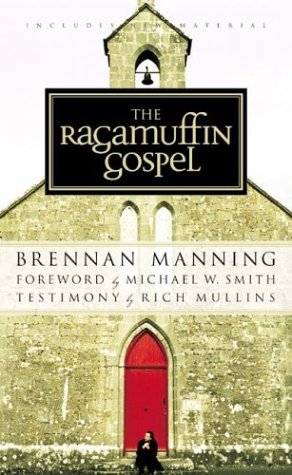
In his classic The Ragamuffin Gospel author Brennan Manning devotes a chapter to the “Second Call” in the Christian’s Life.

Sometimes things don’t work out according to plan, Manning says. Sometimes Christians are devastated by death, disease, divorce, debt or disaster and find that they cannot live the afternoon of their lives by the morning plan. They have to find a new plan. They have to construct new goals and start over.

There is simply no other way.

This is the time when Christians are often surprised by a second call, when God intervenes and calls them as clearly and definitively as the first time around, and sometimes even clearer.

The Bible is full of second calls: Moses at the Burning Bush, The Prodigal Son, the distraught Peter at the Sea of Tiberias, to name but a few. These were people who once had a sense of destiny but who lost it as a result of the mistakes they had made: Moses became an exile in Midian, the Prodigal ended up in a pigsty, Peter went back to his fishing boat.

Yet they were all given a second chance. In fact, it was their response to the second call that made them legends.

The saying “God forgives, people don’t” is true indeed. Like the Prodigal’s older brother, we often frown when our fallen ones want to get up. Our sense of self righteousness is threatened by the notion that God wants to restore them fully and unconditionally, and so we prefer them to remain in the pigsty from where they can make us look better than them.

C. S. Lewis once spoke of the four ages that people go through: Unenchantment, Enchantment, Disenchantment, Re-enchantment.

If you have become disenchanted in your faith, don’t give up. Allow God to re-enchant you.

Love and Fear: A Given

Now this is the commandment… that the LORD your God commanded me to teach you… that you may fear the LORD your God… You shall love the LORD your God with all your heart and with all your soul and with all your might. Deuteronomy 6: 1,2,5

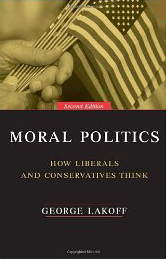
In his 1996 book Moral Politics: How Liberals and Conservatives Think cognitive linguist George Lakoff argues that the main difference between “conservatives” and “liberals” has to with their understanding of morality. According to Lakoff, conservatives hold to a “Strict Father” morality and liberals to a “Nurturing Parent” morality.

Lakoff’s views seem to confirm an age old observation, namely that all religions can basically be divided into one of two broad categories: Religions of fear and religions of love. The one depicts a stern God of justice, the other a compassionate father.

The famous passage above provides us with two clear directives: We are to love God and we are to fear God. The reader is not given any choice between the two. Clearly the God of the Bible is both a God of justice and a Father of compassion.

Love and fear are the strongest emotions known to humanity. All of us are born with them, and we can never rid ourselves of them. Our only choice in the matter is who (or what) we shall love and who (or what) we shall fear. This combination of reverential awe and loving adoration is what worship is all about. Without God this remarkable inborn drive to worship becomes corrupt and misdirected. Love then becomes sensuality or a sick dependency, and fear becomes terror or anxiety.

The great challenge for the Christian is not to try and create these two forces, but to detect them and to redirect them back to their rightful object: God.

The Faith of the Fatherless

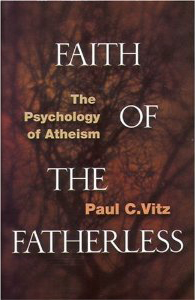
A number of years ago psychology professor Paul Vitz wrote a book with the title Faith of the Fatherless. In it he pointed out that many atheists maintain that religious belief arises from psychological factors.

Sigmund Freud, for instance, saw belief as a form of wish-fulfilment, an illusion deriving from powerful wishes or unconscious infantile needs.

The irony of this “projection theory”, Vitz says, is that it actually provides us with an explanation for unbelief rather than faith. According to him, it “provides a powerful new way to understand an illusion as the psychological basis for rejecting God — that is, a projection theory of atheism.”

A case in point: The German philosopher Friedrich Nietzsche famously proclaimed that “God is dead”. What few people know is that his father was a Lutheran minister who passed away a few months before Nietzsche’s fifth birthday. His conclusion might very well have been a way of dealing with his childhood loss – code for “Dad is dead”.

Nietzsche’s case is by no means an exception. Jean-Paul Sartre, Bertrand Russell, David Hume, Arthur Schopenhauer and Albert Camus were all atheistic philosophers who lost their fathers at a young age. Vitz mentions that many other famous unbelievers also had troublesome relationships with their fathers. Hitler, Stalin, Mao, Freud, Voltaire, Thomas Hobbes, Samuel Butler and H.G. Wells all had abusive or weak fathers.

We can learn a number of things from Vitz’s book. More important than the insight into unbelief is the disturbing, yet glorious truth of how our children are affected by our actions. We fashion their understanding of God.

This may provide one reason why the Bible is so concerned with the plight of orphans. Where there is no parent to represent God to a little one, Christians should be ready to step in and fill the void.

From Eternity to Here

Every now and again a book comes along that captures the essence of Christianity in a remarkable way. These are the writings that subsequent generations refer to as “classics”, and they are usually only recognized for their profundity and timelessness once the author is no longer around. There are many examples (although not too many!): Watchman Nee’s The Normal Christian Life, Andrew Murray’s Abide in Christ, Dietrich Bonhoeffer’s The Cost of Discipleship, C.S. Lewis’ Mere Christianity, Chesterton’s Orthodoxy, Gene Edwards’ The Divine Romance, and so on.

The latest addition to the “Classic” bookshelf in my library (reserved for the very best of Christian literature) was published only a few years ago. Yet it is regarded by many as one of the greatest Christian books of the last few decades, and a certain future classic.

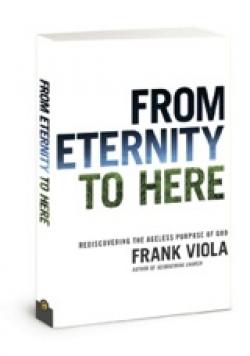
I am, of course, referring to Frank Viola’s From Eternity to Here. Although not everyone agrees with Viola’s views on the church (he co-authored the controversial Pagan Christianity in which he and fellow author George Barna takes on “institutional Churchianity”), few of his critics find fault with this book. It has been endorsed by traditionalists and radicals alike, and is revolutionalising the way multitudes of believers worldwide see the “big picture” of Christianity.

Unlike so many Christian bestsellers of late, Viola has no new revelation to offer (thank goodness). On the contrary, From Eternity to Here combines in one volume the greatest and most precious insights from the best of the “Deeper Christian Life” authors of the past few centuries. People who are unfamiliar with authors like Nee and Murray, and with Christian movements such as the Brethren, will find this book astoundingly revelational and deeply edifying.

I heartily recommend From Eternity to Here. In fact, I recommend that you buy a few extra copies and give them away.