 This is the third (and most important) post dealing with the issue of “desire”. If you happen to read this and you have not read the previous two, it might be a good idea to do so first. However, what I am about to share can stand on its own. It is, I believe, such a foundational truth that it ultimately relegates everything else relating to “desire” to the status of mere commentary. And so you can continue right on if you are not in the mood to read the previous posts.
Desire: An Appetite
What is desire? Desire is a yearning towards something. It is a hunger for something, and so it can be described as an appetite. Of course human beings have many desires for many different things, but in the final analysis they are all bits of one great desire. All appetites are mere shadows of one single appetite, namely the human appetite for spirituality.
Let me explain. Just as we are born hungry, and just as we need a source through which life will be administered to us in order to replace “craving” with “satisfaction”, so we are born spiritually hungry. In other words, just as “life” exists on two planes, namely the natural and the spiritual, so our yearning for it exists on two planes. We are naturally hungry, and we are spiritually hungry. Consequently, we can experience “fullness” both in the natural and spiritual realm.
Note that “hunger” and “satisfaction” serve as the primary indicators by which humans determine whether life has been administered to them or not. Of course this does not mean that these indicators are infallible. If you have seen Super Size Me you will know what I am talking about. But mostly we get it right. Mostly the pangs on our stomach direct us in a marvelous way to some or other source of nutrition that not only provides gratification, but that also keeps us alive.
Until we are hungry again, of course. And then the process repeats itself.
The point cannot be overstated: Hunger is what we experience, but it is in fact life that we crave. My two year old seems constantly hungry, but he is oblivious of the fact that when he eats he is satisfying a much deeper need: The need to survive as a human. And so God has designed a marvelous cycle of desire and fulfillment to keep us alive.
At this point we are ready for a few conclusions:
• Human desire is always an attempt to move from death to life, although this mostly happens outside of awareness. Note that Eve’s desire for the forbidden tree neutralized the fear brought about by God’s ominous warning of certain death. We’ll see why in a moment.
• For desire to cease, it looks outside itself for an object that can administer the life necessary to provide gratification. Eve “saw” the forbidden tree and concluded that the prospect of being “like God” would administer more life than eating of the other tree. Clearly, for being like God would imply more than merely receiving life. It implied becoming a source of life.
• Desire is not a pleasant experience. As the awareness of lack, its main aim is to destroy itself. And so the exhilaration of desire does not have to do with the desire itself, but with the prospect of gratification, that is, with desire’s absence. Desire’s main aim is to stop desiring. This is why Eve’s desire led her to pick and eat the forbidden fruit.
• The aim of desire is to bind the one who desires with the object of desire in a union of life. The result of this union is contentment, satisfaction and a total immunity to all lesser objects of desire. Eve expected the tree to do more than provide a snack. She expected it to transform her identity.
• When the object of desire fails to live up to its promises, for instance by offering mere temporary gratification, desire will return and the cycle will begin again. This could lead to an effort to extract more out of the object of desire or to interact with it in a fresh way. It could also lead to a total abandonment of it in the hope of finding a more suitable object of desire (See the reference to the Samaritan woman of John 4 later on in this post).
Made by God, Made for God
With the above in mind, let us consider two quotes:
You have made us for yourself, and our hearts are restless until they find their rest in you. Augustine
There was once in man a true happiness of which there now remain to him only the mark and empty trace, which he in vain tries to fill from all his surroundings, seeking from things absent the help he does not obtain in things present. But these are all inadequate, because the infinite abyss can only be filled by an infinite and immutable object, that is to say, only by God Himself. Blaise Pascal
God created us with a passion in our hearts: A passion for him. The aim of this desire is to unite us to God in an eternal, loving union. Just as children crave mother’s milk for the sake of their survival, we crave spiritual satisfaction for our spiritual survival. And just as the human body will not allow itself to be fooled in regard to the demands of its appetite, God does not allow us to experience this satisfaction apart from him.
Now think about this:
WHEN GOD DISAPPEARS OUT OF OUR PICTURE, OUR DESIRE FOR HIM DOES NOT DISAPPEAR.
No. It remains. It is an eternal and indistinguishable spiritual survival instinct, and it cannot be eradicated. And so, without God, the very passion that was intended to unite us to God becomes the passion that drives us to all kinds of objects and things in which we hope to find a suitable substitute for the absence of God. The reason people ‘s desires lead them to all kinds of sins is that they are seeking spiritual fulfillment. As Chesterton once said: “Every man who knocks on the door of a brothel is looking for God.” It is because of dispossession that we seek to possess, in other words.
If you are still with me, please stay here. I am about to say something that you may never have heard, and that may very well change the way you view Christianity, the world and yourself:
DESIRE CANNOT BE RESISTED.
Let me say that again: Desire cannot be resisted. The reason for this is that it is a spiritual force, given by God to you for the purpose of enabling you to fulfill the greatest commandment: To love him with all your heart, mind, strength and soul.
This instinct is engraved on your DNA and nothing can ever change it. The great commandment has never been an option. It is part of your constitution. And you will spend your life trying to obey it, no matter how confused you may be as to how to do it. The difference between human beings is not that some are religious and others are not. No. All people are deeply religious. The difference between them has to do with the particular avenue they choose as an outlet for their religious instincts. Even a self-professed atheist is doomed to finding some sort of mission, object or person in his or her life to make it more bearable. As always, desire is the navigating tool to do so.
Now for the punch line: If desire cannot be resisted, then it is futile to try and do so, even if it is “sinful” desire. To try and conquer desire is to fight against God, for desire is given by God as the appetite of the human soul. Even a child will tell you that it is pointless to overcome hunger by trying to resist it. It simply won’t work. Hunger and thirst only disappear when there is a filling of sorts, and it has to be a filling that corresponds with the demands of the body. This is why people adrift on the ocean eventually die of thirst. Seawater does not do it for them. In fact, the more they drink, the more they thirst. And to religiously command such a person to “stop thirsting” is idiocy.
The Purpose of the Law
This, of course, is the purpose of the Mosaic Law: To illustrate the impossibility of conquering human desire. As I pointed out in The Root of Desire II (this may be a good time to read it, if you haven’t done so before), Paul’s epic battle to keep the law of God (and his ultimate failure) had absolutely nothing to do with sins like adultery, theft, lying and so on.
No, Romans 7 makes it clear that all of Paul’s failure in keeping the law sprung from one, single commandment: The tenth, that is, the prohibition against desire. The “very commandment that was intended to bring life” (Note: …to bring life) instead produced in Paul “every kind of covetous desire” (See verses 8-10). And so Paul concludes: “I would not have known what coveting really was if the law had not said, “Do not covet.” Put differently, Paul would not have understood desire as a powerful spiritual force that cannot be overcome by willpower, even the strongest religious willpower in the world, were it not for the tenth commandment.
Desire cannot be resisted, not even by the world’s most moral man. This is why God chose Saul the Pharisee as the channel through which to reveal the benefits of the New Covenant. Through Saul’s dismal failure to keep the law that he respected so much, the real purpose of the law is revealed: To make us aware of sin. Not of sins, but of sin.
The law shows us that we are slaves of desire and that we cannot do anything about it. Yet it is not the desire itself that is sin, but the way in which we choose to satisfy it. To get this wrong is to commit idolatry, that is, to attribute God-like characteristics to lifeless things. As strange as it may sound, the principle underlying all sin is love. But it is forbidden love. As Norman Grubb pointed out, sin is an illicit love match.
For our man adrift on the ocean, neither seawater nor willpower can bring life. For the man in Romans 7, and that includes all of us, neither sin nor religion can satisfy us. We need “real food” and “real bread”, to use Jesus’ terminology. Our desires must not be annihilated. They must be redirected. That statement is so important that it bears repeating:
OUR DESIRES MUST NOT BE ANNIHILATED. THEY MUST BE REDIRECTED.
Desire is the force that is intended to drive us away from the inherent emptiness in ourselves, and the horrible experience of that emptiness, to some or other source of fulfillment. This force is even stronger than our natural survival instinct, which is why some people will commit suicide in the hope of finding more satisfaction in death than they do in life. As I pointed out in the previous posts, every action of a human being is preceded by a desire. When we act, we obey desire. Desire rules us. We do not rule desire.
The man who sold all in Matthew 13 did not do so because he found religion. He did so because he found a treasure that was worth more than everything he owned. Through it all he remained true to his desires – desires that were transformed by a discovery of great treasure.
Similarly, the mistake of the rich young ruler was not his unwillingness to let go of his possessions. It was his inability to see the supreme worth of Jesus Christ. He was blind to the pearl of great price, as all of us are, and so his desires compelled him to hold on the only collection he knew. This is why Jesus pointed out, in true Romans 7 fashion, that salvation is “impossible” for human beings. The impossibility, of course, has to do with ruling over our desires. Clearly, for “where your treasure is, there your heart will be also” (Matthew 6:21).
The Solution to Romans 7
The solution to the problem of Romans 7 is found in Romans 8. Here we find the “filling” that solves the universal problem of humanity’s spiritual emptiness. Romans 8 is about the Spirit of God, and the implications of being filled by the Spirit.
In this chapter Paul says that “through Christ Jesus the law of the Spirit of life set me free from the law of sin and death” (verse 2). Note the movement from death to life, and then note how this actually plays out in practice: “ Those who live according to the sinful nature have their minds set on what that nature desires; but those who live in accordance with the Spirit have their minds set on what the Spirit desires” (verse 5). Note the references to desire. And note that human desire does not cease in this equation. Rather, it is redirected from the guidance of the sinful nature to the guidance of the Spirit. And so the man in Romans 8 finds it possible to keep the law, for his desires has been conformed to the will of God!
Paul’s effort to resist desire in Romans 7 was futile. This was no mistake, but a necessary lesson to indicate that salvation is an impossibility for humans, but a possibility with God whose Spirit of life can arrest our desires and direct them in a wholly different direction.
Christ the Bread and Water of Life
The above clearly illustrates how bankrupt religion is as a means to curb desire. Only Jesus Christ can offer the satisfaction sought by the human soul. No amount of rules, ritual, willpower or anything else in the whole, wide world can do this. Only Christ can, and this is what we mean when we say “Jesus Christ is all”. Of course, this is what the Bible means when it says that Jesus Christ has the supremacy in everything and that “God was pleased to have all his fullness dwell in him”.
Think about it: Jesus had at his disposal countless metaphors by which to illustrate to us who he was and what his mission involved. But he chose the image of a meal from heaven to do so. We are to eat and drink him, he instructed us, and the result will be that we will never hunger or thirst again. Every time that Christians sit down to the Lord’s Supper, this is what they confess. Christ is our life. Christ is our delight. Christ is sufficient. We desire nothing but Christ.
Loving the Father and loving the Son is not an act of the will. It is a spontaneous and irresistible compulsion following the discovery of who God really is. This treasure is locked up in Jesus Christ, as is evident from the following verses:
• It has pleased God to let his fullness dwell in Christ (Col. 1:19)
• Jesus Christ is the “image of the invisible God” (Col 1:15; 1 Cor. 4:4)
• Jesus Christ is the “exact representation” of the being of God (Heb. 1:3)
• Jesus Christ is the “Word” of God, that is, God’s primary communication to us (John 1:1, 14)
• When Philip asked Jesus to “show” the Father to the disciples, Jesus replied: “Anyone who has seen me has seen the Father. How can you say, ‘Show us the Father’? Don’t you believe that I am in the Father, and that the Father is in me?”
Jesus Christ is the character and nature of God embodied in the flesh, and so the only avenue to the fullness, wholeness and contentment of God is in and through Jesus Christ. We are to take him into us as our ancestors were intended to eat of the tree of life. His life is the life of God, the only life that satisfies.
And so the great commandment, to love God with all of our faculties and with all of each faculty, and the Mosaic Law’s great prohibition against covetousness, is in reality one and the same commandment. Matthew 22:37 and Exodus 20:17 are the two sides of the same coin, the one stated positively, the other negatively. The one summarises the great “do” of the law (covering all the so-called “sins of omission”) and the other the great don’t of the law (covering the “sins of commission”). All of them are wrapped up in a single principle: The all-sufficiency of Jesus Christ. And so Jesus Christ is both the central message of the Ten Commandments as well as the New Testament.
With the above in mind, reconsider the following verses, most of which you may know:
O God, you are my God; earnestly I seek you;
my soul thirsts for you;
my flesh faints for you,
as in a dry and weary land where there is no water … My soul will be satisfied as with fat and rich food,
and my mouth will praise you with joyful lips, when I remember you upon my bed,
and meditate on you in the watches of the night… Psalm 63
The LORD is my shepherd; I shall not want. He makes me lie down in green pastures.
He leads me beside still waters. He restores my soul. Psalm 23:1-2
As a deer pants for flowing streams,
so pants my soul for you, O God. My soul thirsts for God,
for the living God. Psalm 42:1-2
Whom have I in heaven but you?
And there is nothing on earth that I desire besides you. Psalm 73:25
I spread out my hands to you; my soul thirsts for you like a parched land. Psalm 143:6
You open your hand; you satisfy the desire of every living thing. Psalm 145:16
Your name and renown are the desire of our hearts. My soul yearns for you in the night; in the morning my spirit longs for you. Isaiah 26:8-9
Come, everyone who thirsts,
come to the waters;
and he who has no money,
come, buy and eat!
Come, buy wine and milk
without money and without price.
Why do you spend your money for that which is not bread,
and your labor for that which does not satisfy?
Listen diligently to me, and eat what is good,
and delight yourselves in rich food.
Incline your ear, and come to me;
hear, that your soul may live. Isaiah 55
Blessed are those who hunger and thirst for righteousness, for they will be filled. Matthew 5:6
Jesus said to her, “Everyone who drinks of this water will be thirsty again, but whoever drinks the water I give him will never thirst. Indeed, the water I give him will become in him a spring of water welling up to eternal life. John 4:13-14
Jesus said to them, “I am the bread of life; whoever comes to me shall not hunger, and whoever believes in me shall never thirst. John 6:35
I am the living bread that came down from heaven. If anyone eats of this bread, he will live forever. This bread is my flesh, which I will give for the life of the world. John 6:51
On the last and greatest day of the Feast, Jesus stood and said in a loud voice, “If anyone is thirsty, let him come to me and drink. John 7:37
What is more, I consider everything a loss compared to the surpassing greatness of knowing Christ Jesus my Lord, for whose sake I have lost all things. I consider them rubbish, that I may gain Christ. Philippians 3:8
He said to me: “It is done. I am the Alpha and the Omega, the Beginning and the End. To him who is thirsty I will give to drink without cost from the spring of the water of life. Revelation 21:6
The Spirit and the bride say, “Come!” And let him who hears say, “Come!” Whoever is thirsty, let him come; and whoever wishes, let him take the free gift of the water of life. Revelation 22:17
Jesus Christ is our satisfaction. We were created and designed for a relationship with him. That is why we exist. Nothing can quench this desire. We are the bride of the Groom, and our desire is for our husband.
Like the Samaritan woman at the well, we will remain thirsty throughout all our affairs with different lovers. Our problem is not our thirst. It is the wells we drink from. This is the message of John 4, and it is the central message of the Bible. As God said through the prophet Jeremiah: “My people have committed two sins: They have forsaken me, the spring of living water, and have dug their own cisterns, broken cisterns that cannot hold water.”
Only two sins, God says. We do not allow him to be our satisfaction, and we seek our satisfaction in that which cannot satisfy.
It was Augustine who said that the gospel is not about duty, but about delight. He was right. Our mission on planet earth is to delight ourselves in God. Nothing brings God more glory, for nothing reflects his fullness better in this age. His perfection is best expressed in our contentment. His life is best expressed in our satisfaction.
As the living Father sent me, and I live because of the Father, so whoever feeds on me, he also will live because of me. John 6:57
 It has been almost five years now since a group of us started meeting weekly in a house in one of the suburbs of Bloemfontein.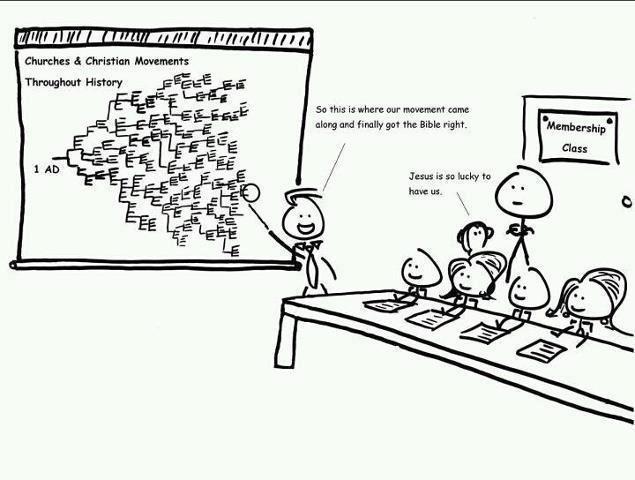






 Justice of God