Blessed are the Balanced

One of the best definitions I have heard of “the straight and the narrow road” is that it is the extremely thin line that runs between extreme viewpoints. These words remind me of a friend who once said to me that his favourite Bible verse is “Blessed are the balanced.”

Most theological disputes throughout the centuries have missed the fine line of balance. As Luther said, we are like a drunken man who falls off his horse, gets back on the saddle and then falls off the other side.

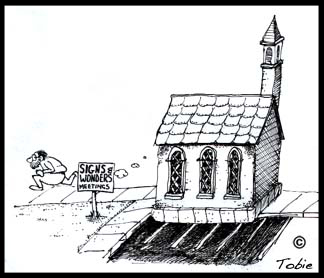
When it comes to the place and purpose of miracles, signs and wonders in the life of the Christian, this has especially been the case. In this regard the history of the church is reminiscent of a pendulum-driven cuckoo clock, with each “Tick” representing dead formalism and antagonism towards anything supernatural (the so-called Cessationist view or “streepteologie”) and each “Tock” representing a frenzied fanaticism and conviction that the church must experience the same intensity of supernatural phenomena that marked the ministry of Jesus Christ.

Both views have led to tragedy and tears. Tick: My faith is a mere cognitive affair. I cannot expect God to powerfully intervene in my life, heal my child, deliver my alcoholic husband, and so on. Tock: God is under an obligation to heal people. If he doesn’t, then it’s because they don’t have enough faith.

And so the clock has been ticking through the ages. As a policeman once said to me: The surest way to cause an accident is to over-steer when trying to avoid danger.

God is as alive as he was during the apostolic era. He is a miracle working God who heals, delivers and provides. But let us not try and box him with our formulas and stage shows.

The Illusion of Assault

And as they went, they entered a village of the Samaritans, to prepare for Him. But they did not receive Him, because His face was set for the journey to Jerusalem. And when His disciples James and John saw this, they said, “Lord, do You want us to command fire to come down from heaven and consume them, just as Elijah did?” But He turned and rebuked them, and said, “You do not know what manner of spirit you are of. For the Son of Man did not come to destroy men’s lives but to save them.” Luke 9:52-56

There is much talk nowadays about doing “simple church”, and many of us are rejoicing about this. I remember a time when any such allusions were regarded as insubordinate, extreme and even heretical. But the times… well, you know the Bob Dylan song.

There’s just one problem: Shifts of this magnitude stir up lots of discussion, and, in the process, provide platforms for the disenchanted. And so we find ourselves with a new type of ally, namely those who have joined our ranks because they believe that they share a common enemy with us: The institutional church. There is a great danger here, and that is what I wish to address in this article.

For starters: Everybody knows (ok, should know) that sharing an adversary is a dangerous basis for unity. The euphoria of swopping trench tales eventually wears off, leaving us with an awkward alliance that we may not know how to escape from. For those of us who shared the actual trenches the illusion of camaraderie and the inevitable nostalgia is even greater.

Remember the episode where Frasier and his old buddy Woody Boyd spent a delightful evening catching up and exchanging stories from the old days? Frasier is tricked into thinking that the experience is authentic and indicative of a real and lasting friendship, and suggests a follow-up lunch at a Mexican diner the next day. But the thrill has evaporated, and afterwards Frasier is forced to admit that he no longer enjoys spending time with Woody. The reason? They have nothing in common except a few old stories. Frasier then faces the problem of communicating this to Woody without hurting his feelings. Whilst contemplating his dilemma he has to endure several more strained visits.

The episode is hilarious and tragic at the same time. It illustrates all too clearly what happens when people team up for the wrong reasons, and wrong reasons there are many. Nostalgia is one of them, especially the kind that comes from having bandaged one another’s wounds.

The Illusion of Assault

There is a way to escape the inevitable breakup, but it comes at a price. When people unite on the basis of a common enemy they can always sustain the cozy we-feeling by preserving the consensus that they are, in fact, still under attack. The illusion of assault, we can call it. It is a strategy that is employed, usually outside of awareness, when the benefits of coping with an assault begin to outweigh the ones associated with the cessation of the assault. Preserving buddyhood is a great reason for allowing your mind to treat you so treacherously, but there are, in fact, a myriad of reasons for keeping your enemies alive.

Take, for instance, the phenomenon of combat neurosis or, as it is oftentimes called, “shell shock”. The soldier who returns from war, but dives under a table and draws his gun every time a vehicle backfires in the street, feels more secure expecting to be attacked than he does enjoying the safety of his hometown. It is in his interest to hold on to the illusion that the battle is far from over as he cannot imagine himself without the comfort of the coping mechanisms acquired during the experience that almost cost him his life. Without a threat these nifty survival tactics become dispensable, hence the illusion of assault. It is not unheard of to miss the smell of Napalm in the morning.

Victims of abuse oftentimes do the same. Instead of assessing those around them realistically they prefer to see them as extensions of their abusers, even sabotaging relationships and invoking conflict to prove the point. Or they find themselves attracted to partners who display the very tendencies they have fled from in previous disastrous relationships.

There is a security in knowing how to protect oneself. There is also an addictive element to the relief and elation that comes from surviving a harrowing ordeal, and so it is not difficult to understand why some survivors develop a psychological need to be exposed to further assault.

Having said this, let me add that post-traumatic stress disorder is a much more complex phenomenon than that which I have described above. It is not my aim to minimize the severe challenges faced by survivors of war and abuse. Rather, it is too create a parable by borrowing an element associated with the psychology of defense and survival.

When the Struggle Becomes an End in Itself

In my own home country of South Africa we are currently seeing an even purer display of the illusion of assault than those mentioned above. The struggle against Apartheid is something of the past, yet a number of prominent contemporary activists insist on singing the old struggle songs and shouting rhetoric such as “Kill the Boer, kill the farmer” at their political gatherings, and this they do at the obvious dismay of thousands of farmers who have to cope with an epidemic of farm murders that have swept the country in recent years.

Why? There are a number of reasons, but an important one is that struggles such as the South African one brings with them a lot more than the prospect of political liberation. They also bring brotherhood, sacrifice, martyrdom, clandestine meetings, hope, anticipation, exhilaration, adoration of the saints in exile and prison, and so on. Heck, who would want to trade that for the non-eventfulness of serving under a democratically elected government, especially if the streets are crime ridden and you are jobless? And so the illusion of assault is employed to preserve the spirit of the struggle and to keep up the hope of a better tomorrow. But this can only happen when the old enemy is caricaturized as a current threat that has to be resisted. Even though the Boer and farmer no longer pose the same threat to the oppressed masses as they did decades ago, the controversial slogans suggest that they do.

Again, I am not denying that a people’s liberation involves much more than a democratic election, or that it takes a lot of time and effort to mend the effects of past injustices. What I am suggesting is that it is inappropriate to do so with a spirit of militancy that belonged to a period that many would describe as a war.

The Curse of Apologetics

This brings me back to the topic under discussion: The church of Jesus Christ, especially as she is busy emerging worldwide. There is a rising global awareness that the best adjectives to describe her are ones like “organic”, “simple” and “relational”. Whilst the new Christianity is by no means a homogenous movement with a uniform agenda or belief system, it is certainly true that an increasing number of fellowships are discovering that all efforts to escape institutionalism are doomed unless they lead to, and find their culmination in Jesus Christ. And so the centrality and supremacy of Jesus Christ are coming back into focus in many churches worldwide, so much so that one can only ascribe it to the gracious work of the Holy Spirit.

Many of the people involved in these fellowships, and even leading them, have never seen the insides of a theological seminary. This is no tragedy as their peculiar focus on Jesus Christ, prayer and the Scriptures more than compensates for their lack of theological training. Like Peter and John, the fact that they are common and uneducated is irrelevant as it is clear that they are companions of Christ.

It is clear, then, that the emergence of this radiant bride calls for a new type of reflection. Theologies that were constructed to assist us with the business of institutionalism will only work up to a point for her, and sometimes they won’t work at all (My seminary textbook on liturgical processes during the Pentecostal church service is a case in point). This is true for each one of the classical theological disciplines, but it is especially true in the field of apologetics.

Why? For two reason. Firstly, Apologetics is the one discipline that depends heavily on an enemy for its existence. The name says it all. Derived from the Greek apologia, which means to “speak in defense”, it is known as the “discipline of defending a position”. Think about this for a moment. We have a ministry of defense right in our theological backyard. But also think about the implications. If the business of defense produces fringe benefits, as we have seen, it places us in a precarious position. The church is by no means immune to the illusion of assault. Our best witness is history itself.

Secondly, our vulnerability in this regard is not merely circumstantial to Christianity’s sad history of division and institutionalism. It is causal. To say so is not to radically oversimplify an extremely complex issue. Rather, the observation is based on the nature of Christianity itself. What distinguishes Christianity from other ideologies and religions is the way in which it addresses itself to the issues of retaliation and revenge, and this includes defense.

Christianity could just as well be called the art of response. Get this wrong, and the whole thing falls apart. But more about this a little later.

Revolting for Christ

The most famous incident in church history of “speaking in defense” took place on 31 October 1517, when Martin Luther posted his 95 theses on the church door in the university town of Wittenberg, protesting the selling of indulgences. To this day Protestants worldwide celebrate “Reformation Day” as an annual religious holiday. In many German states and even some countries, such as Slovenia and Chile, it is a national holiday. In fact, the very word Protestant was birthed during the events that flowed out of Luther’s protest. Derived from the Latin protestari, it means to publicly declare or protest.

This already raises a red flag. To call oneself a “Protestant” is to adopt a religious tag that speaks of resistance and defense. You are a “protester”, which makes one wonder what you will be if there is nothing left to protest against (Oops, I need an enemy to preserve my identity…). Of course not many Protestants reflect on this obvious logic, but that is indeed the implication. The word “Reformation” suffers from the same disease. It suggests a course of corrective action, a response to something gone wrong. But what if there is nothing left to reform? Yet the term is almost consecrated in some circles, as though the true church was born in 16th century Germany.

This, of course, is sheer nonsense. The Protestant Reformation, or “Revolt”, as it is often known, was a legitimate and necessary response to a sick movement that masqueraded as the church of Jesus Christ. But that is all it was. It did not usher in a new golden era of revolution that was intended to last until the second coming. Neither did it add a spice to the business of doing church that had been missing up to that point. Yet that is the message that is often conveyed.

Confusing Form for Content

The error is understandable. The Reformation created a subculture that introduced a multitude of people to the realities of grace, the accessibility of Scripture, the priesthood of the believer (well, up to a certain point) and so on. Can you blame anyone for wanting to fiercely protect a discovery of this magnitude? Of course not. The problem arises when the form of the thing is confused with its content, when the rediscovered realities of Christ is thought to be somehow connected with the idea of the Reformation, or with Luther, or with the distinctive Calvinistic theology that emerged out of the soil of protest against Rome.

To make this connection is to bestow divinity on things that are finite, which happens to sound chillingly similar to a textbook definition of idolatry. The problem with idols is that they are lifeless, and that their novelty wears off before you can say totem pole. And so idol worshippers are forever pressed to come up with gimmicky ad-ons to keep their dopamine levels at bay. This explains why so many religions eventually go the route of sex, drugs, rock and roll and human sacrifice. It also explains why so much of contemporary Christianity is… contemporary. But most of all it explains why so many of us religious people have a deep psychological need for an enemy. As we will see in a moment, defense is a religion in and of itself. Nothing raises dopamine like a good fight, and so, of all the religious gimmicks in the world, this one comes out on top. Add it to the most mundane of all sects and you will soon have a revival on your hands.

The problem with the Reformation, however, is bigger than the mere burden of keeping its stowaways alive. It’s also bigger than the accompanying temptation to employ the illusion of assault in order to do so. The problem with the Reformation is that it was birthed out of a reaction to begin with. The idea of assault was not an afterthought, or a mere fine method to put some sparkle back into a revival that had fizzled out. No, it was a reality, and a very real one at that, right from the first thud of Martin’s hammer on the Castle Church’s door. And so the dynamics associated with defense and survival provided momentum to the whole Reformational adventure from the word “GO!”

The result was more damaging than we realise, not only for those who associated themselves with the Reformation but for the whole of Protestantism (there’s the word again), and that includes you and I. The glorious liberties of grace and all its accompaniments came to be associated with the Reformers and their theology, as we have noted. But worse than that, this entire unnecessary association merged itself with the idea of defense. To think of grace, faith and the Scriptures was to think of Luther, and to think of Luther was to think of a God-inspired revolt. Freeze Luther’s frame and the background will freeze with it. There you’ll see a Pope who is the Antichrist and a few heretics smoldering at the stake. Naturally, for you cannot sustain the spirit of the revolt apart from its enemies. And so you’ll need the Pope to remain the Antichrist and the heretics to remain on the grill for your reformation to remain a reformation.

This game gets really involved. Watch carefully and you will see something else in the background. You will see your fellow protesters who were fighting for the cause, and you will wonder about those who are absent. You will especially wonder about their spirituality, or the lack of it. They do not participate in your revolt and so they are not to be seen in your frame. They are not fighting your war, and so they are not allies and certainly not comrades. They do not speak the language that you speak. They do not understand where the real threat is and nothing about the solution. Oh, they are welcome to enlist, but they must first come for a briefing. A rather intense one. And what if they are unwilling? Or if they drop out during basic training? Well, as the Scriptures say, those who are not for us are against us (Jesus did say that somewhere, didn’t he?). Point is: In your mind those who do not share in the form of things will appear to be missing out on their essence. You have confused the two, remember?

There have been millions of Christians throughout the centuries who discovered the Scriptures without Luther, God’s sovereignty apart from Calvin and absolute grace without predestination. That is not a problem, and it should not be one. There is no need to enlist these believers as co-apologists for our cause by baptizing them in the rhetoric that have become so indistinguishable (in our minds) from the actual issues. If they have the Scriptures and the Spirit of Christ they already are that. They don’t need the buzzwords and insignia as proof.

And just in case Reformed Christians think I’m picking on them, there are millions of Christians who have discovered holiness apart from Wesley, the gifts of the Spirit apart from Pentecostalism, the locality of the church apart from Watchman Nee and, believe it or not, water without the Baptists. Must these souls be briefed in order to obtain the fullness of their discovery? By now you should know the answer.

But there is another angle to all of this, and here it gets really ugly.

Inflatable Shermans

The other day I found myself staring at a picture of the legendary M4 Sherman tank. These impenetrable pieces of armour were used extensively during World War II, and contributed greatly to the Allied forces’ victory.

There was only one problem. The one in my picture could not drive, or shoot, or even withstand the smallest piece of shrapnel. It was inflatable, you see. A big piece of nothing filled with hot air, ready to pop at the slightest scuffle, good for nothing except perhaps a children’s party.

Not quite. These dummy tanks were just as important during the war as the real Shermans. Examples abound, but one stands out: The legendary landings of the Allied forces at the beaches of Normandy was preceded by a deception operation, codenamed Operation Fortitude, during which the illusion was created that the main invasion of France would occur in Scandinavia and the Pas de Calais rather than Normandy. To accomplish this, inflatable rubber tanks and other military decoys were strategically deployed where German intelligence could spot them. Hitler fell for the deception and prepared his Panzer units accordingly. In fact, he was so convinced by the facade that he initially mistook the actual invasion at Normandy as a diversionary tactic. The operation succeeded beyond anybody’s wildest dreams.

Dummy tanks represent everything that real armour is not. They cannot harm or shield anyone, and they are easy to destroy. Yet they are formidable and indispensable weapons of war. Is there a contradiction in there somewhere? Not at all. The first thing you want to do with expensive military equipment in a war zone is to conceal it. And the best way to conceal it is to create the illusion that it, and your troops, are somewhere else. It is one of the oldest tricks in the book, which is why the enemy of Christendom uses it so effectively. A fake enemy leads to a fake defense, diverting the troops from the real enemy.

Here we are touching on a question that may have been lingering in the back of your mind since you started reading this article, especially if the idea of laying down your weapons makes you feel uncomfortably vulnerable: Does the illusion of assault imply that the church no longer has enemies, is not under attack and need not be vigilant? Of course not. It simply means that we run the risk of seeing them where they are not. And once that happens we become extremely vulnerable to a second, greater error, namely not seeing them where they are. We have become fixated with dummy tanks, and the real ones are loading their guns while our backs are turned to them. The illusion of assault is more than a silly waste of time. It is Satan’s most effective diversionary tactic.

The Primacy Effect

Let me illustrate by asking you a simple question. When I say the word “devil”, what image pops into your mind? Perhaps, like me, you will see Hot Stuff, the mischievous little red devil with his diaper, pointed tail and pitchfork. The reason why this particular slide imposes itself on me every time I hear the word is that it was the first one ever presented to me, and you know what they say about first impressions (or the “primacy effect”, if you are a cognitive psychologist).

But there is a problem with my picture. Trace its origin and you are not going to end up in the pages of the Bible, but in the fertile mind of legendary Harvey Comics illustrator Warren Kremer. The problem with Kremer’s creation, and other similar classic Harvey Comics titles, such as Casper the friendly Ghost, Spooky and Wendy the Good Little Witch, is not that they expose innocent children to the horrible world of devils, spirits and witches, as concerned parents oftentimes fear, but that they introduce children to a world that has absolutely nothing to do with any of these things. And so, by having received a substitute, our kids become blinded to the real. Note that the substitute does not need to be evil, and that it can even be cute, for the real evil is to be found in the diversionary tactic.

We may convince ourselves that we have not been conned, but most of us simply think further along the same lines until we come up with an image of Satan that looks like the cover of Uriah Heep’s 1982 album Abominog. Look carefully and you’ll see that it’s still Hot Stuff, the red horned devil with the pointy ears. You are now an adult, but you are still looking at the dummy, not the real thing. And you are, most probably, protecting yourself and your children against the dummy, not against the real thing. To protect them from Satanism is to keep them away from the tattooed kids with their black clothes and heavy metal music, not from the influence of their Uncle Bill who is an elder and also a racist. Uncle Bill may very well be the embodiment of evil, in the same class as the religious leaders to whom Christ said “you are of your father the devil”, but you are oblivious as your definition of evil has already been taken. Like Hitler, you are so enamored by inflatable Shermans that you have withdrawn all your troops from the place where the attack is actually going to take place. Sad to say, you are going to lose the war…

On a Positive Note

All is not lost. Earlier I mentioned that Christianity could just as well be called the art of response, and in closing I would like to elaborate on this. Our salvation and deliverance is to be found in this single insight. Taken to its logical conclusion it will protect us from the illusion of assault and from all the decoys of the enemy.

Christ modeled the art of response through his death on a cross, a death that he could easily have avoided by using the most basic of defense strategies. Yet he did not, and by commanding us to take up our crosses and follow him, he commands us to respond to our enemies in a very particular way – as he did to his. Not retaliatory, but gracefully. Grace is more than being forgiven. It is to respond in love when no such love has been earned. It is to love your enemies, to pray for those who persecute you and turn the other cheek. This is the example of Christ, and we are commanded to follow in his steps.

Note the words of Peter, as well as the implication that this most fundamental tenet of our faith has on our defense of it:

For this is a gracious thing, when, mindful of God, one endures sorrows while suffering unjustly. For what credit is it if, when you sin and are beaten for it, you endure? But if when you do good and suffer for it you endure, this is a gracious thing in the sight of God. For to this you have been called, because Christ also suffered for you, leaving you an example, so that you might follow in his steps. He committed no sin, neither was deceit found in his mouth. When he was reviled, he did not revile in return; when he suffered, he did not threaten, but continued entrusting himself to him who judges justly… Finally, all of you, have unity of mind, sympathy, brotherly love, a tender heart, and a humble mind. Do not repay evil for evil or reviling for reviling, but on the contrary, bless, for to this you were called, that you may obtain a blessing… But even if you should suffer for righteousness’ sake, you will be blessed. Have no fear of them, nor be troubled, but in your hearts honor Christ the Lord as holy, always being prepared to make a defense to anyone who asks you for a reason for the hope that is in you; yet do it with gentleness and respect, having a good conscience, so that, when you are slandered, those who revile your good behavior in Christ may be put to shame. For it is better to suffer for doing good, if that should be God’s will, than for doing evil. For Christ also suffered once for sins, the righteous for the unrighteous, that he might bring us to God.

At the heart of Christianity lies the art of defense, that is, responding to those who threaten, intimidate and even attack you. The illusion of assault, more than anything else, brings with it the potential to interfere with this process. It provides the enemy access to the nerve center of your faith.

The Serpent’s Promise

Perhaps some illumination is necessary at this point. The Christian’s duty not to retaliate does not mean that there is no retaliation. It simply means that the retaliation does not come from the Christian. Why? Because it comes from God. Retaliation is God’s prerogative, not ours. As we read in the letter to the Romans:

Beloved, never avenge yourselves, but leave it to the wrath of God, for it is written, “Vengeance is mine, I will repay, says the Lord.” To the contrary, “if your enemy is hungry, feed him; if he is thirsty, give him something to drink; for by so doing you will heap burning coals on his head.” Do not be overcome by evil, but overcome evil with good.

The message is clear. When we “repay” we are trespassing on God’s territory. To take vengeance is to play God. Whatever we wish to accomplish through the law of tit-for-tat, God says he will accomplish in his own manner. To interfere with this process is a form of unrighteous self-exaltation.

Think about this for a moment. At the heart of the first sin, and every single sin that issued forth from it, lies a single motive: To be like God. This was Satan’s sin, and it was Adam’s. Adam identified himself with the satanic nature through his endeavor to be like God. Christ, the last Adam, did exactly the opposite. As we read in the letter to the Philippians, he “did not consider equality with God something to be grasped.” His obedience masterfully illustrates the reversal of the curse associated with stolen godhood.

With the satanic temptation came a promise: You shall surely not die. This statement was no coincidence, nor a mere refutation of God’s statement that disobedience would cause death, the aim being to dispel any hesitance, fear or doubt on the humans’ side. Rather, the serpent’s second statement elaborates on his first one. These words describe the very essence of divinity: Eternal life. This was the coveted reward associated with Satan’s offer to “be like God.” Become like God and live forever. Become like God and preserve your life.

Here we finally uncover the reason behind the universal need for defense. The almost addictive quality associated with the act of defense, the heady feeling of oneness with co-defenders, the magic atmosphere of the aftermath; all of these can be explained in five words: You shall surely not die. Most importantly, the fanatic religious zeal that so often accompanies the act of defense is explained by these words. In the final analysis, defense is a spiritual exercise, a religion. As in the case of virtually all religions, its aim is immortality.

All of this would have been quite acceptable, were it not for the fact that those five words were never uttered by God. They came from Satan, which tells us something about the true nature of defense. This does not mean that the quest for immortality is inherently flawed, or that those who seek it are evil. Not at all. It simply means that immortality was never intended to be our problem. We were never meant to carry the burden of preserving our lives.

Let’s think about that for a moment. The essence of divinity is eternal life, as we noticed a moment ago. This life is in God alone. It exists in him, not as a quality that he has, but as the essence of who he is. That is what makes God God. And so Satan’s promises, that we shall “be like God” and “surely not die”, are one and the same promise.

The point is that we were not placed on this planet to seek eternal life, and the reason has just been stated. Eternal life does not exist apart from God, and so it cannot be pursued as a thing in itself. Seeking eternal life without seeking God is like trying to be full without eating. It is really an extremely futile exercise. The only possible way out of the dilemma is to play God, and while that may be nice as a game, it is a waste of time as a means to immortality. We are not gods. We are life receivers. We need the Deity to breath into our nostrils. Without receiving life from God we are mere dust. That is where we come from and that is where we will return.

That’s rather a depressing conclusion, and so the effort to make Satan’s words believable has dominated the history of the human race. I do not need to prove this point. More able commentators have already done so. The one work that stands out in this regard is the 1974 Pulitzer Prize winning The Denial of Death by Ernest Becker. Ironically, Becker did not write as a Christian or to confirm the Christian thesis. It is an unbiased and objective assessment of humanity’s greatest predicament and their obsessive efforts to escape from it, and herein is its authority. Becker offers no real answers, which is the way it should be. There are no answers, except the maxim that God is life and that immortality can only be found in him. He is our defense, and once we realize this we can lay down our arms. That is the point. When we do defend our faith it is a very different type of defense to the one that is associated with the will to survive. It is the defense spoken of by Peter and Christ. It does not have victory as its aim, but service.

The church has been deceived in this area time and again throughout her history. In the name of defense she has become the harlot, not the bride, with her cup filled with the blood of the saints. Christ’s prophecy that “an hour is coming for everyone who kills you to think that he is offering service to God” has seen fulfillments ad nauseam. The exhilaration of the battle never had anything to do with God to begin with. It was and is purely psychological. To win is to be number one, and to be number one is to survive, to be immortal, to become one with your fellow survivors. Ever wondered why you feel so strangely alive each time your favourite team scores a goal?

It is a sad fact, but one that we may not deny. Our church history is oftentimes nothing but the history of our collective combat neurosis. In South Africa we use the word “bossies” (Afrikaans for “bushes”), derived from the Angolan “Bush War” of the eighties and nineties and referring to the soldiers who came back home with a strange look in the eye. Like many of these men, we end up abusing our own family. Like them, we have left the war, but the war has not left us. We only feel alive when we fight, and so that is what we do, justifying it under the banner of “defending the faith”.

It is for this reason that we need to rethink this issue. The Bride of Christ, as she is busy emerging worldwide, has no share in any of this, and that is why we need no allies in our ranks who are there because they are angry or because they think we share a common enemy with them. No, the bride is not interested. She does not join the crusades. She does not lead the inquisition. She does not approve of Michael Servetus’ murder. She does not declare drowning the third baptism and “the best antidote to Anabaptism.” She does not experience any schadenfreude when she learns that a money-hungry televangelist’s marriage is falling apart. She does none of this.

Contemporary examples of the above abound, and they are too many to mention. But I’ll give you just one. I am not a particularly great fan of Benny Hinn, for a number of reasons. But one of them is not his belief that there are nine people in the Trinity. Even though he actually preached this during a sermon in October 1990, he later recanted. Yet the internet is full of websites using his initial statement as evidence that he is a heretic, without any reference to his retraction. There is one term for this: False testimony. It is a sin and it should be repented from. Christ’s bride has no part in this either.

She does none of the above and she has no part in any of the thousands of atrocities that have falsely been committed in her name. No, she follows her Lord and Husband who prayed with his last breath for his persecutors. She does this, because she has learned from him that to lose your life is to save it.

Do we want to be part of her? Then this is the lesson we must learn.

PS: The picture of the tank fooled you, didn’t it?

The Secret of Happiness

My soul will be satisfied as with fat and rich food, and my mouth will praise you with joyful lips, when I remember you upon my bed, and meditate on you in the watches of the night. Psalm 63:4 – 5

It seems that everybody has become interested in the pursuit of happiness lately. Oprah has made an issue of it on her program, Will Smith has done a movie on it, numerous scholarly studies are being done on it and a whole new genre of books on the topic are hitting the shelves, some of them instant bestsellers.

Happiness, of course, is one of the central themes of Scripture. The happiness of the creature, however, is never presented apart from the fullness of the Creator. To put it differently: The Bible presents personal happiness as the primary evidence that the excellence of God has been fully apprehended. God’s perfection is best expressed in man’s delight, for, as John Piper has written, “enjoying God makes him look supremely valuable”.

Happiness, therefore, was never intended as a mere experience for the benefit of the individual. Rather, it should be seen as the heart’s response to the glory of God and so as the primary testimony of God’s greatness. The experience of fullness and contentment so desperately sought by the world can never be found apart from the fullness and contentment that exists in God alone. The supreme worth of God is what causes satisfaction in the heart of a person, and nothing else.

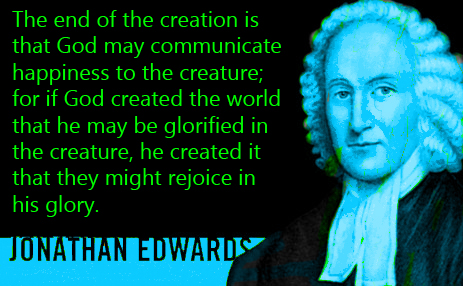
As Jonathan Edwards wrote three centuries ago: “The end of the creation is that God may communicate happiness to the creature; for if God created the world that he may be glorified in the creature, he created it that they might rejoice in his glory.”

Reductionism in the Ecclesia

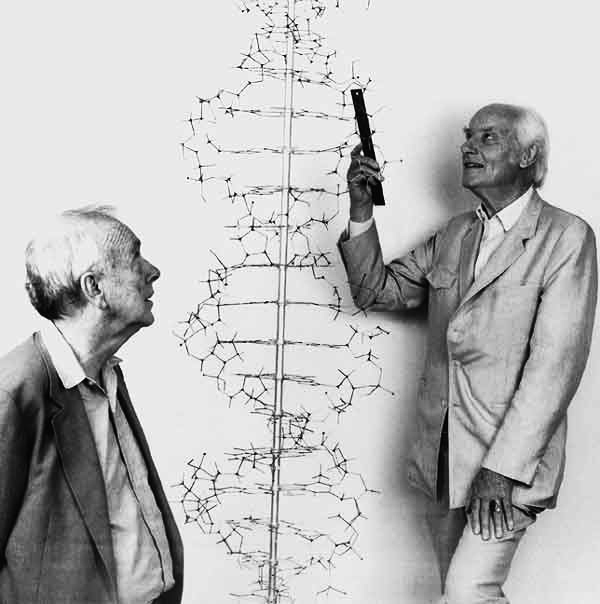
Francis Crick, co-discoverer of the DNA structure, concluded in the light of his findings that a human being is “nothing but a pack of neurons” and “no more than the behaviour of a vast assembly of nerve cells and their associated molecules.”

This philosophy is called reductionism and is based on the theory that we can best understand complex systems by reducing them to small parts. By doing so the underlying structure is revealed, and the whole system is then interpreted and labeled accordingly. The whole is never more than the sum of the parts, in other words.

This approach may work in a science lab, but it can never be indiscriminately applied to the study of human beings. When researchers do so they inevitably reduce people with personal histories, feelings and hopes to the status of organisms under a microscope – on the same level as Pasteur’s bacteria – oftentimes concluding that we are no more than advanced animals or complicated machines.

The threat also exists in the church. Christians fall into this trap when they use particular theological systems or moral paradigms as their criteria for classifying, labeling and stereotyping others. This is nothing but a theological variety of reductionism, as it reduces a fellow human being to a mere set of beliefs, a compilation of dogmas or a series of sinful actions.

Jesus Christ never defined people in this way. Scripture makes it clear that he always saw and treated people as unique individuals: Nicodemus was more than a Pharisee, Mary was more than a prostitute, Zacchaeus was more than a tax collector, and so on.

There is a marvelous lesson to be learned here: To stand against moral decay and theological liberalism may never cause us to deny the humanity of those who have become victims thereof.

The Medium is the Message

“Do not do what they do, for they do not practise what they preach.” Matthew 23:3

Some of us will remember Marshall McLuhan as the Canadian professor from the sixties who coined the term “the global village.” Yet MacLuhan gained recognition and became famous for another of his aphorisms, namely “the medium is the message”.

According to McLuhan, any chosen medium selected for the purposes of communication serves not only as a carrier for such communication, but actually determines the content of the communication. For instance, American Indians may communicate by using smoke signals, but they will never be able to discuss deep philosophy this way. The form of communication does not allow for the content.

This principle becomes especially relevant when we consider that Christians are called “living epistles” in the New Testament. We are, in other words, mediums or carriers of God’s communication. Taking McLuhan’s principle into consideration, we can safely assume that our message is determined not only by its content, but first and foremost by us, its preachers. Who we are and what we do will determine the effect our speech will have on our listeners.

Actions, therefore, speak much louder than words. I am reminded of Oscar Wilde who is rumoured to have said to someone: “Who you are speaks so loud that I cannot hear what you are saying.” Some of the saints have said: “Preach the gospel at all times. If necessary, use words.”

The apostle Peter wrote along the same lines: “Live such good lives among the pagans that, though they accuse you of doing wrong, they may see your good deeds and glorify God on the day he visits us.”

Let us be challenged to become not only hearers and proclaimers, but also doers of God’s word.

Witness Lee: We Were Wrong

It took a lot of courage, but after an intense six year investigation the world’s most respected counter-cult organization, the Christian Research Institute (CRI), issued an apology under the heading: “We Were Wrong.”

President Hank Hanegraaff summarized the findings of his organisation’s research in a 50 page treatment of the matter (Christian Research Journal, Issue 32-06. See http://journal.equip.org/articles/we-were-wrong). Under scrutiny was a movement simply known as the “local churches” (without capitilisation), associated with the work of the Chinese Christian Witness Lee, who worked with and under the direction of the legendary Chinese martyr Watchman Nee.

Nee sent Lee to Taiwan in the late 1940’s to expand the work there, and was imprisoned for his faith soon after. Lee carried on with the work, which experienced tremendous growth under his leadership, and took it to the United States in the 1960’s. Today there are thousands of local churches worldwide.

For years many churches in the West called Lee’s work sectarian and even cultic, hence the investigation by CRI. Some of the accusations against Lee included anti-Trinitarian views and the “deification” of man, but both were refuted by the investigation.

The real unhappiness, it would appear, stems from Nee and Lee’s teaching that denominationalism is sinful and divides the one body of Christ. As with the churches in the Bible, each town or city should have only one local church, named according to location (e.g. The Church in Bloemfontein), even if they meet in different venues for practical purposes. Nee was so slandered for his criticism of denominational division that he once wrote “The Watchman Nee portrayed by them I would also condemn.” And Lee is still called a heretic by thousands, in spite of CRI’s findings.

Cultic? Perhaps we should not shoot the messenger because we do not like the message.

Die God van die Dinge

My apologies to English readers.

So ‘n paar jaar gelede het ‘n prominente teoloog van die NG kerk in die Kerkbode geskryf dat die kerk nie meer dieselfde dink oor die “streepteologie” nie. Dit was nogal nuus vir ‘n hele klomp van ons wat destyds uit die kerk is, juis oor die “streepteologie.”

Ek onthou dit soos gister. Ek het ‘n draai by ‘n Pinksterkerk gemaak en was ietwat oorbluf dat daar mense bestaan het wie se geloof vir hulle so werklik was. Na nog ‘n besoek of drie het ek begin om my dominee (en die NG kerk) liederlik te verwyt, en kort daarna is ek met ‘n Boetman ergenis weg na my nuwe familie toe wat so baie van die Heilige Gees en sy gawes geweet het. En natuurlik kon ek om die dood toe nie verstaan hoe die klomp geleerde NG mense so oningelig kon wees nie.

Maar dit was dertig jaar gelede. En na jare se bediening in Pinkster- en Charismatiese geledere (want sien, ek word toe uiteindelik ‘n predikant in my nuwe kerk) kon ek nie help om te begin wonder of my destydse dominee dalk iets beet gehad het met sy streepteologie nie. Ek moes uiteindelik erken: As daar dan nie ‘n streep getrek is nie, dan ten minste ‘n stippellyn. So hard as wat ons almal probeer het, ons kon maar net nie die apostoliese era met sy wonderwerke laat herleef nie.

Wat my uiteindelik by die vraag gebring het: “Wat op aarde maak ek hier?” En toe ek ernstig begin besin, besef ek dat dit nie die Pinkster-klem van die Charismate was wat my as jong NG lidmaat aangegryp het nie, maar die feit dat ek God ontmoet het in hulle dienste. Ek is gekonfronteer met ‘n regverdige God voor wie ek as sondaar ineengekrimp het. Die verbondsleer waarmee ek groot geword het, het na ‘n bleek en patetiese alibi gelyk voor hierdie God wat ‘n waaragtige bekering vereis het. Ek het gebyt, “hook, line and sinker”, want iets diep binne in my het gesmag na ‘n lewende verhouding met hierdie Wese wat sy lewe in liefde vir my afgelê het.

En dit het nie net met my gebeur nie, maar met derduisende ander NG’ers in die tagtigs en negentigs. Ons het God gesoek en hom nie regtig in die kerk gevind nie. Daar was geen konfrontasie met die kruis nie, geen eis tot ware dissipelskap nie, en geen sprake van die verskriklike oproep om ons lewens op aarde prys te gee om sodoende Christus as wins te verkry nie. Ons genade was ‘n goedkoop genade, soos Bonhoeffer my later sou leer. Eintlik maar gratis, want ons is geleer dat ons so half-en-half in die hele storie in gebore is – soos klein Joodjies in die verbond in. Uitverkore verbondskinders van die soewereine God, en enige poging van ons kant af mos eintlik maar sinneloos. Daarom dat ons agter die kerkmuur gesit en rook het na katkisasieklasse. Want ons geloof en ons bestaanswêreld het mekaar nie gekruis nie.

Die nuwe Christenskap was anders. Dit het “commitment” gevra. Jy moes jou hand opsteek en met die paadjie afloop, en jou vriende het jou gesien. Dit was ‘n radikale verbintenis tot ‘n lewendige God – totaal anders as enigiets waaraan ons gewoond was. En dit het daartoe gelei dat ons vort is na die “sektes” met hulle passievolle aanbidding en evangeliepreke. Ons het ons bekeer, en op jeugkampe en straatuitreikings het ons getuienisse begin met: “Ek is aangeneem en voorgestel, maar ek het nooit die Here gedien of geken nie…” Ons het die wêreld vir die Here omgekeer, en veroorsaak dat die Charismatiese beweging in ons land begin blom het.

Maar baie van ons is uiteindelik ontnugter, want saam met die nuwe Christenskap het daar ‘n spul bagasie gekom. Ons moes hoor dat finansiële voorspoed ‘n goddelike reg was, en dat jy eers moes saai voordat jy kon maai. En toe saai ons totdat ons seerkry, en party van ons totdat ons bankrot was. Maar soos ‘n gesofistikeerde piramiede-skema het die ding darem in die boonste ouens se lewens begin werk, en dit het ons hoop gegee – vir ‘n tydjie. Ons moes hoor dat God jou baie graag wil genees, maar dat dit net kan gebeur as jou geloof groot genoeg is. Bely dit net, al het jou liggaam nog nie die boodskap gekry nie, moes ons hoor. En so het ons in die geloof vir mekaar begin lieg. Ons moes hoor dat mense wat nie in vreemde tale praat nie nooit die Heilige Gees ontvang het nie, en ons het bitter jammer gevoel vir Andrew Murray en ons godvresende oupas en oumas. Ons moes hoor van tientalle wyses waarop jy steeds deur die duiwel gebind kan wees al is jy ‘n wedergebore Christen, van bloedlyn-vloeke wat oorgedra word deur goddelose voorgeslagte, en van vloeke op Persiese tapyte en Oosterse monumentjies. Ons moes hoor dat ‘n mens kon omval in die gees en kon lag in die gees, en dat God in kerkdienste wêreldwyd besig was om skitterwit westerse tande in soliede goud te verander terwyl die derde wêreld se tandloses tandloos gebly het. En deur al hierdie en ander golwe heen moes ons voortdurend hoor dat ons uiteindelik op die drumpel van die groot wêreldherlewing was, en dat spesifiek ons gemeente ‘n sentrale rol plaaslik sou speel.

En so het baie van ons maar weer opgepak. En van ons het nie eens die moeite gedoen om weer ‘n kerk te gaan soek nie, maar Sondae in huise begin bymekaarkom met die hoop om die verlore basics van ons geloof weer te vind. Want ons was almal moeg van wonder en sukkel. Ons was moeg van ander mense se fenominale visies wat ons heeltemal wou insluk, en ons was moeg van foefies. Ons het in die eerste plek eintlik in God belanggestel, moes ons onsself herinner, en nou het dit gevoel asof ons hom verloor het.

Inderdaad, die kanse het beter gelyk om hom by die huis te vind as by die kerk, en dit is uiteindelik presies waar baie van ons hom gevind het. In die eenvoud van gebed en die Woord; in die saam wees, saam kuier en saam eet met God se familie. In die celebration van God se volheid soos hy dit in Christus gegiet het, en uiteindelik deur Christus in ons. Ons het huis toe gekom. Letterlik en figuurlik. Naamloos, sinodeloos, “hype”-loos, tempelloos, priesterloos. Maar ons het Christus as wins gekry. En mekaar. En ons het gawes onder ons begin ontdek wat nie spectacular was nie, maar wat gestalte aan Christus in ons midde gegee het. Die priesters was weg, maar die herders het opgestaan. Die konferensiepredikers het verdwyn, maar nie die lering nie. En so kan ek aangaan. Uiteindelik was alles die moeite werd.

Destyds het ek die NG teoloog se artikel, en die ampers-apologetiese trant daarvan, interessant gevind. Dit het amper gelyk asof die streepteoloë wou verskoning maak vir hul onkunde van die verlede. Dit is seker nodig dat die kerk herbesin oor haar Pneumatologie, maar ons moet versigtig wees dat ons nie die probleem op die verkeerde plek soek nie. Die rede hoekom ‘n groot groep mense die NG kerk verlaat het in die laaste paar dekades was nie omdat hulle ‘n probleem met die kerk se Pneumatologie gehad het nie, maar omdat dit nie vir hulle gevoel het of hulle God daar ontmoet het nie. Om dit anders te stel: Ons is weg, nie omdat ons anders oor die genadegawes van die Heilige Gees wou dink nie, maar omdat ons anders oor God se teenwoordigheid in ons lewens wou dink. Die feit dat ons ge-“charismatiseer” het in die proses was bloot toevallig, en dikwels tragies.

En dit is hoekom ons weer geloop het, toe dit vir ons begin voel of die dinge van God belangriker geword het as die God van die dinge.

(Hierdie is ‘n artikel waarvan ‘n gedeelte ‘n uittreksel is uit God en die Volkie onder in Afrika wat jare gelede op LitNet verskyn het.)

The Heart of the Pharisee IV

4 Turning Religion into an Idol

The primary difference between the Pharisee and the Christian is to be found in the area of their motives, we have seen. The Pharisee, as with all depraved humanity, suffers from a terminal disease called covetousness, which could be defined as the primordial desire and drive of humanity to regain what was lost with the spiritual fall of their ancestors. This drive towards self-assertion is well captured by the Greek concept of Eros, and lies at the heart of all idolatry. The New Testament introduces Jesus Christ as the bread of life for a starving world, and as the pearl of great price that makes a person gladly leave all he has in order to gain Christ, with thanksgiving and contentment being the reward and outcome.

Religious Idolatry

In this chapter we shall ask the question: ‘Where does that leave the Pharisee who rejects Christ?’ The answer is not difficult to come by. The Pharisee, like all human beings, is an idolater. Idolatry, as we have seen, originates in the heart and manifests as desire. It is humanly impossible to overcome this inner force of desire through effort or will power, which is why no human being can effect his or her own salvation. To turn from the obvious idols of this world, such as money and sex, is to deal with a symptom and not a cause. A religious conversion is entirely useless if it does not address the state of the covetous heart within. The heart will remain idolatrous even if a man converts to religion. The only conversion in such a case will be the conversion of the idol, not of the individual. Carnal idols will be exchanged with religious ones, and this is where Pharisaism comes in.

The Pharisee’s error is that of confusing the law of God with an end rather than a means. Being blind to its real purpose, the Pharisee does not go beyond the law, but tricks himself into a position where the law becomes his focal point, and so the object of his idolatry. He believes himself to have found the pearl of great price, and this explains why he has no interest in rumours about other pearls. The very religion that was intended as a schoolmaster for a mere season in his life, to guide him to Christ and to maturity and freedom, has ensnared him and made him its slave. The object of his covetousness, which provides him with his reason for being, is his religion.

In this sense the Pharisee is distinct from the sinner. He fornicates not with the world, but with religion. He uses it as an object of desire, to calm the restlessness of his soul and as a substitute for God. This he does in the name of God. The Pharisee loves the law, but he hates the lawgiver. As his greatest interest is that of self, as is the case with all depraved people, every religious deed he does is for the sake of self. His religion is nothing but sophisticated paganism, and the god he confesses a mere projection of his own thinking, suited to his own desires, and created in his own image.

It is significant that Paul, in Romans 2:1, after having discussed the birth of Paganism and idolatry (1:18-32), says to the religious Jews: ‘…you who pass judgment do the same things.’ The statement is a strange one, especially if one considers how religious the Pharisees were. But the riddle is solved in chapter 7, where we see that even the most righteous Pharisee is a lawbreaker as a result of his inability to keep the tenth command. And so the damning statement of chapter 2:1 culminates in chapter 3:9-12: ‘…Jews and Gentiles alike are all under sin…There is no one righteous, not even one; there is no-one who understands, no one who seeks God. All have turned away, they have together become worthless; there is no one who does good, not even one…’

This explains why the Pharisee hates the message preached by Christ. Christ demands a denial of the self, even of the religious self.

The New Testament on Why the Pharisee is Attracted to Religion

The problem of Pharisaism might be described as that of religious Eros. It is a fascination with God, all for the wrong reason. It is the pursuit of spirituality motivated by covetousness. It is, to use Paul’s term, ‘godliness as a means to gain’ (1 Tim. 6:5), and it was pointed out by Christ as the driving force behind Pharisaic religion: ‘Everything they do is for men to see; …they love the place of honour…; they love to…have men call them “Rabbi”.’ (Matt. 23:5-8). The ‘hypocrites’ of Matt. 6 had the same problem: They gave to the needy to be ‘honoured by men’ (v. 2), they prayed to be ‘seen by men’ (v. 5), and they fasted to ‘show men they are fasting’ (v. 16). The point of Matt. 6, of course, is that we should not store up treasures on earth, but in heaven, for ‘where your treasure is, there your heart will be also’ (v. 19-21), and the hypocrites are provided as an example of religious people whose treasure was on earth, as they prefer their reward in the here and now (The words ‘they have received their reward in full’ are repeated in each of the above cases, and each time contrasted with ‘your Father, who sees what is done in secret, will reward you.’)

The New Testament authors were aware that it was possible to practice Christianity with ulterior motives. James, for instance, points out that it is quite possible to pray to God for the sake of self (Jas. 4:3), and Paul reminds us that it is equally possible to preach the gospel with impure motives (Phil. 1:15-18). Doing ‘the right deed for the wrong reason’ can therefore indeed be described as treason, as Blake reminds us, and nowhere is this more true than when those right deeds include religious acts.

If we take the above seriously, then we must admit that we are dealing here with two very different species of religious people, and, indeed, two very different religions. ‘Godliness as gain’ and ‘godliness with contentment’ (1 Tim. 6:6) are two bipolar opposites that have nothing in common, and never will have.

Extrinsic vs Intrinsic Religious Orientation

So great and obvious is the difference that it has been identified in the field of psychology of religion, with Gordon Allport’s concepts of intrinsic and extrinsic religious orientations representing the backbone of the research. The difference between the two orientations are defined as follows by Allport and Ross (Cited in Kahoe 985:24 (4) 409):

‘Extrinsic Orientation: Persons with this orientation are disposed to use religion for their own ends… It serves other, more ultimate interests. Extrinsic values are always instrumental and utilitarian. Persons with this orientation may find religion useful in a variety of ways, e.g., to provide security and solace, sociability and distraction, status and self-justification. The embraced creed is lightly held or else selectively shaped to fit more primary needs. In theological terms the extrinsic type turns to God, but without turning away from self.

Intrinsic Orientation: Persons with this orientation find their master motive in religion. Other needs, strong as they may be, are regarded as of less ultimate significance, and they are, insofar as possible, brought into harmony with the religious beliefs and prescriptions. Having embraced a creed, the individual endeavors to internalize it and follow it fully. It is in this sense that he lives his religion.

The well established Allport and Ross Scales have been used in numerous studies focusing on the correlation between religiousness and a variety of personality variables and prejudices. For instance, in a study of 850 volunteers, reported in the Journal of Psychology and Christianity (Watson, Morris, Hood & Biderman 1990, 9 (1): 40-46), it was found that ‘Intrinsics’ were lower than ‘Extrinsics’ in what is called a ‘pathological form of narcissistic exploitativeness’. Extrinsic religious orientation was also shown to be correlated with ethnic prejudice in a 1967 article by Allport and Ross (1967, Vol 5, No 4, 432-443).

By pointing to the above, I am by no means implying that Allport has given us a psychological definition of the difference between Pharisaism and Christianity. His concepts involve much more than this, but they are helpful as a scientific confirmation of the fact that the locus of religious people can generally be defined in one of two ways, and, of course, one cannot help but to notice the resemblance between these definitions and the conclusions drawn thus far in these articles.

The Murder of God

Another helpful perspective from the arena of psychology comes from psychiatrist M. Scott Peck. Peck’s interest in human evil is rather unorthodox for a psychiatrist, especially one as famous as Peck, and comes under scrutiny in his People of the Lie (1983). Peck converted to Christianity after he authored the bestseller The Road Less Travelled, and followed it up with this study on human evil. Peck has been somewhat of a controversial figure in Christian circles, but I quote him here primarily in his capacity as a scholar and student of human behavior.

Frustrated with the lack of a ‘body of scientific knowledge about human evil deserving of being called a psychology’ (43), Peck wrote People of the Lie, drawing, amongst others, from the works of Erich Fromm and Malachi Martin. Peck’s definition of evil is helpful to us, as it touches on the very issues addressed above, albeit with a different focus: In The Road Less Travelled, he defines evil as ‘the exercise of political power – that is, the imposition of one’s will upon others by overt or covert coercion… – in order to avoid…spiritual growth’ (298). In People of the Lie, he says: ‘It would, I believe, be quite appropriate to classify evil people as constituting a specific variant of the narcissistic personality disorder.’ (1983:145). According to Peck, evil is ‘live spelled backward…Evil is in opposition to life. It is that which opposes the life force. It has, in short, to do with killing…I do not mean to restrict myself to corporeal murder. Evil is also that which kills spirit…’ (1983:46).

Peck acknowledges his indebtedness to Fromm in this regard: ‘Erich Fromm…broadened the definition of necrophilia to include the desire of certain people to control others – to make them controllable, to foster their dependency, to discourage their capacity to think for themselves, to diminish their unpredictability and originality, to keep them in line. Distinguishing it from a “biophilic” person, one who appreciates and fosters the variety of life forms and the uniqueness of the individual, he demonstrated a “necrophilic character type”, whose aim it is to avoid the inconvenience of life by transforming others into obedient automatons, robbing them of their humanity.’ (1983:47).

Reading the above, it becomes clear why Peck sees evil as a variant of narcissism. To use our terminology: It is a coveting of the other for the sake of the self. As such it could be described as love gone toxic, parasitical rather than life-giving, a black hole rather than a light. It is a desire for the life energy of another, a type of psychic vampirism, resulting in the murder of his or her spirit. The case studies discussed by Peck in People of the Lie clearly show how this toxic love is fostered by an underlying sick dependence on one or more other people, and even how narcissistic personalities could be attracted to one another with the sole purpose of having their desires gratified in and through such a sick relationship, or ‘incestuous symbiosis’ (1983:133), such as in the case of ‘Hartley and Sarah’ (1983:122).

Evil, therefore, can be described not only as the opposite of ‘life’, but also as the opposite of love, as Peck’s definition of love includes the nurturing of another’s spiritual growth (1978:85). Evil, according to the above definitions, could therefore be seen as an inversion of the second of the two greatest commandments. It is not love for the sake of the other, but love for the sake of self, and therefore the exact opposite of love.

The question that arises at this point is this: Is human evil a phenomenon that is only prevalent in human relationships, or can it also present itself in the relationship between a human and his god? To put it another way: If the inversion of the second commandment is such a real threat, why not also, and even more so, the inversion of the first and greatest commandment? If we can love others for the sake of our selves, why can we not also love God in this way?

What would one call an imposition of the will not only on others, but also on God, and, if I may adjust Peck’s terminology slightly – a desire to make him controllable, to diminish his unpredictability and originality, to keep him in line, to foster his dependency, to discourage his capacity to think for himself? I believe the word is ‘crucifixion’. What happened on Golgotha 2000 years ago is not only a timeless display of the love of God, but also a brilliant analysis of human evil as it boils over the brim of history. Nowhere exists a better and more graphic picture of humanity’s attempt to put God in his place than that of a band of wicked men nailing Christ to a wooden cross.

The sad part of the story is that the murder of God took place in the name of God, as it always does. It is the religious who make it their business to determine the place and the purpose of God, not the sinners, and so it is the religious who get upset with the God that does not fit into their scheme. As Peck put it in What Return Can I Make?: ‘ They [the Pharisees] murdered Jesus. The poor in spirit do not commit evil. Evil is not committed by people who feel uncertain about their righteousness, who question their own motives, who worry about betraying themselves. The evil in this world is committed by the spiritual fat cats, by the Pharisees of our own day, the self-righteous who think they are without sin because they are unwilling to suffer the discomfort of significant self-examination.’ (Cited in Peck 1983:80).

The Enchantment of Religion

It needs to be stated that the phenomenon of Pharisaism is a product of both people and context. We have thus far focused mainly on the human motivators behind Pharisaism, but we dare not ignore the motivators inherent in religion itself. As these articles are about the former and not the latter, a few brief remarks would have to suffice.

There is no place that offers better concealment and disguise for the person with narcissistic tendencies than the religious environment. Keeping in mind that ‘the central defect of the evil is not the sin but the refusal to acknowledge it’ (Peck 1983:77), a great many sick people find solace within the four walls of the church, oftentimes to hide not only from others, but also from themselves. No doubt some of these ‘conversions’ could be described as ‘religiously-colored psychological conversion which brings some unity and harmony to a troubled person’s life’ (Conn 1986:9). Moreover, the church offers great social benefits for the lonely soul, and it is one of the few places in the world where people will politely listen to you if you have something to say, regardless of whether it be a testimony, a word of encouragement, a prophecy or a tongue. Indeed, it is the one place on earth that will still give you acceptance when all other institutions have ceased to do so. If we talk about a platform from where the self can be asserted, actualised and authenticated, then few places offer such an ideal one as the church.

When it comes to the ministry the lure is even stronger. The advantages, both temporary and eternal, of being a mouthpiece for God are great. With the package comes status and influence, and other benefits might range from mystical powers to material wealth, depending on the context of the ministry or denomination. Walter Conn, in his book Christian Conversion: A Developmental Interpretation of Autonomy and Surrender (1986), provides fascinating insight into the psychology of conversion, and shows how people convert to religion for different reasons. No doubt the same can be said about the call to the ministry, and a theological case might even be made out of the life of Judas Iscariot, who clearly had ulterior motives for joining the band of disciples. Perhaps it would be correct to say that the ministry is the one occupation that simultaneously appeals to the two greatest needs of humanity, namely the need for self-actualisation and the need for God. You can, in other words, get the world with heaven thrown into the package. You can eat your cake and still have it. You need both, or the equation won’t work. As one of the world’s top female televangelists said recently, ‘If God’s not going to work for you, then why serve him?’

The Enchantment of Theology

An area that requires a separate treatment, albeit a brief one, is that of theology. Is there any true theologian or student of Scripture that cannot identify with C. S. Lewis’ comments on doctrinal books being often more helpful in devotion than devotional books? As he puts it: ‘I believe that many who find that “nothing happens” when they sit down, or kneel down, to a book of devotion, would find that the heart sings unbidden while they are working their way through a tough bit of theology with a pipe in their teeth and a pencil in their hand.’ (1985:30). Fundamentalists might frown about the pipe, but the principle remains true. Theology has an inherent enchantment that is unlike that of any other discipline, and I can barely imagine a professional life more perfect than one spent studying the thoughts of the great Christian minds of history.

Yet this is exactly what the Dutch theologian G. C. Berkouwer warns against in his Faith and Justification: ‘Theology is not a complex system constructed for their own entertainment by scholars in the quiet retreat of ivory towers. It must have significance for the unquiet times…’ (Cited in Lane 1984:182). Karl Barth, who also had a reputation for clenching a pipe between his teeth, warns against ‘scientific Eros’, namely Eros, as defined in the previous chapter, in intellectual form: ‘It is the soaring movement by which human knowledge lets itself be borne towards its object and hurries toward them in order to unite them with itself and itself with them, to bring them into its possession and power, and to enjoy them in this way…When scientific Eros evolves in the field of theology, it characteristically and continually confuses the object of theology with other objects. So far as Eros is the motive of theological work, God will not be loved and known for God’s sake, nor man for man’s sake. This situation can only explained by the nature of Eros: every attempt to love and know God and man is made in the quite conscious and deepest interests of the theologian himself, in the self-love of the one who produces this theology.’ (1963:198-199)

In a chapter with the telling title The D-minization of the Ministry, David F. Wells makes the following comments: ‘Insecure ministers who are stripped of importance hope to be elevated through professionalization to the same social standing as other professionals, such as physicians and lawyers. And the Doctor of Ministry degree (D. Min) is the principal tool that seminaries offer to achieve this parity.’ (Guinnes & Seel 1992:175-176). He adds: ‘…among those who have graduated with the degree, 78 percent said that they expected to be more respected in the community and 73 percent expected to be paid more. (p 180).

It is clear, therefore, that the study of God can serve as a substitute for God himself, and so as an idol. It is also clear that the Pharisee, especially, is highly vulnerable to the power of this idol. ‘You search the scriptures because you think that in them you have eternal life; and it is they that testify on my behalf. Yet you refuse to come to me to have life’ (John 5:39, 40).

Theology as entertainment, theology as scholarship, theology as status, theology as a motivational tool, theology as a prosperity message; whatever the case may be, theology as anything but service and love unto God and others is toxic theology, and should be discarded like all waste.

The Bottom Line

This, then, is the heart of Pharisaism. It is the coveting of God and his things for the sake of self. It is religious utilitarianism, and it always includes the murder of the true God for the sake of setting up a counterfeit, fashioned to our image and likeness, behaving like we want him to. The basic problem of sin, as expressed in human covetousness, underlies the phenomenon of Pharisaism, and it gives rise to motives and intentions that are much discussed by psychologists but oftentimes ignored by theologians.

The irony of the Pharisee is that his effort to keep the law makes him blind to his impotence to do so. The tragedy of the Pharisee is that he exchanges the idols of the world for religious ones, without knowing it. And so, whilst appearing righteous on the outside, he is unrighteous within:

‘Woe to you, scribes and Pharisees, hypocrites! For you clean the outside of the cup and of the plate, but inside they are full of greed and self-indulgence. You blind Pharisee! First clean the inside of the cup, so that the outside also may become clean. Woe to you, scribes and Pharisees, hypocrites! For you are like whitewashed tombs, which on the outside look beautiful, but inside they are full of the bones of the dead and of all kinds of filth. So you also on the outside look righteous to others, but inside you are full of hypocrisy and lawlessness’ (Matt.23:25-28).

‘Well did Isaiah prophesy of you hypocrites, as it is written, “‘This people honors me with their lips, but their heart is far from me; in vain do they worship me, teaching as doctrines the commandments of men …Do you not see that whatever goes into a person from outside cannot defile him, since it enters not his heart but his stomach, and is expelled?” And he said, “What comes out of a person is what defiles him. For from within, out of the heart of man, come evil thoughts, sexual immorality, theft, murder, adultery, coveting, wickedness, deceit, sensuality, envy, slander, pride, foolishness. All these evil things come from within, and they defile a person.” (Mark 7:6-8, 18-23)

The Heart of the Pharisee III

3 Covetousness: Roots, Nature and Cure

It is not only in the medical world that diagnosis precedes treatment. When we read the biographies of the saints, we are struck by the similarity between their conversion experiences and the New Testament pattern of conversion discussed in the previous chapter. ‘For the first time I examined myself with a seriously practical purpose. And there I found what appalled me; a zoo of lusts, a bedlam of ambitions, a nursery of fears, a harem of fondled hatreds. My name was Legion.’, writes C. S. Lewis’ in Surprised by Joy, commenting on the experience that drove him to his knees as ‘the most dejected and reluctant convert in all England’. (1955:181-182) I have chosen Lewis for his eloquence, but his testimony is by no means rare. Thousands upon thousands have experienced the overwhelming effects of their own depravity, leading them to call on the name of Christ.

If this Spirit induced self-diagnosis stands so central in the process of true conversion, and if it is so pivotal a distinction between the Pharisee and the Christian, then we dare not treat the subject lightly. The question that addresses itself to us is this: If so powerful a force, if so inherent to all lost souls, if so alien to true righteousness, if so intrinsic to Pharisaism, then what exactly is covetousness?

Covetousness as Compensation for Deprivation

The answer is not as complicated as we might think. It is because of dispossession that we seek to possess. Coveting is the fingerprint of the deprived person. It is compensating for loss. Coveting is taking revenge on a world that has robbed you. It is the fallen creature’s effort to fill the proverbial God-sized vacuum in his soul. As such coveting invariably leads to idolatry, to the breaking of the first commandment, with an idol being nothing but the covetous person’s object of desire – that which he believes can fill the vacuum on the inside; a false or counterfeit god, in other words. This is also how it is defined by Paul in Col. 3:5, where he calls covetousness ‘idolatry’.

The act of coveting is therefore based on a lie, namely that fulfillment is to be found in something other than God himself. As C. S. Lewis put it in Mere Christianity: ‘What Satan put into the heads of our remote ancestors was the idea that they could…invent some sort of happiness for themselves outside God, apart from God. And out of that hopeless attempt has come nearly all that we call human history – money, poverty, ambition, war, prostitution, classes, empires, slavery – the long terrible story of man trying to find something other than God which will make him happy.’ (Lewis 1952:50).

Contentment in Christ

In the light of the above, it becomes clear that for salvation to be truly salvation, the problem of covetousness must be resolved. If covetousness is the natural response of the person without God, then it should follow naturally that where God is found covetousness disappears. Put in another way: If the tenth commandment was designed by God to drive the sinner and the legalist to Christ, then the sinner and the legalist, once driven to Christ, should have the ability to keep the tenth commandment.

The question, therefore, is whether the man in Romans 8 can fare better in practice than the one in Romans 7. Is there any truth to the old Keswick maxim that we ought to ‘get out’ of chapter 7 and ‘into’ chapter 8, and so escape from the life of defeat? The answer is yes, and it has to do with the nature of the command broken in Romans 7, namely covetousness. As discussed, the morally ‘faultless’ man in Phil 3:4-6 became the spiritually defeated man in Romans 7. Yet, after his conversion and his new life described from verse 7 in Phil. 3, we read that contentment replaces covetousness: ‘I have learned the secret of being content in any and every situation…I can do everything through him who gives me strength.’ (4:12).

As pointed out, it is often thought that the belief that Romans 8 presents us with a life free from the defeat of Romans 7, is a pietistic and unrealistic one, tantamount to believing in sinner’s perfection. This, of course, is not the case. To understand this we need to understand that the command not to covet is one never kept by willpower or effort, the way we keep the first nine commandments. If it were, Paul and every sincere Pharisee would have been able to keep it. We can explain it by way of an analogy: Covetousness is an appetite. Like hunger, it cannot be stilled by choice or will. It requires a filling, and once this has happened the pains of emptiness disappears. If we are commanded not to hunger, then implicitly we are commanded to eat, and once we have done so we no longer are hungry, even if we try.

In the same way, contentment is what happens when the filling of God’s Holy Spirit does that which no other idol can do, so much so that covetousness is no longer given further thought. Augustine’s famous sentence captures the essence of this great truth: ‘You have made us for yourself, and our hearts are restless until they find their rest in you’, and so do the words of David in Psalm 23: ‘The Lord is my shepherd; I shall not want.’

Such a filling changes the way a person looks at the world. Commenting on his conversion, Leo Tolstoy said: ‘I ceased to desire what I had previously desired, and began to desire what I formerly did not want. What had previously seemed to me good seemed evil, and what had seemed evil seemed good. It happened to me as it happens to a man who goes out on some business and on the way suddenly decides that the business is unnecessary and returns home. All that was on his right is now on his left, and all that was on his left is now on his right; his former wish to get as far as possible from home has changed into a wish to be as near as possible to it. The direction of my life and my desires became different, and good and evil changed places…’ (Baillie1955:Day 38).

With contentment comes a radical change in desires and motives, therefore, and a careful perusal of Romans 7 and Phil. 3 reveals, indeed, a striking contrast between the motives of Saul the Pharisee and Paul the Christian. In Rom. 7:18 the driving motive is: ‘I have the desire to do what is good…’, and in Phil. 3:10 it is: ‘I want to know Christ…’ The difference between these two wishes exemplifies to us the difference between the Pharisee and the Christian, and should be noted.

Contentment and Agape

It has been pointed out that the tenth commandment is a negative summary of the Old Testament law, intended firstly as an indicator of personal spiritual incapacity, and secondly as a pointer to Christ who does what is impossible for the law and the flesh. As a non-coveting person, therefore, the mark or fingerprint of the saved person becomes contentedness. If we were given a New Testament equivalent summary of the law, stated positively, we would therefore expect it to be: ‘You shall be content’, and we shall now see that it is exactly this, and more.

If covetousness is the desire to possess, then the opposite thereof, namely non-covetousness or contentedness, should not only be the desire not to possess, but a desire to give. Nowhere is this better illustrated than in the previously discussed Matt. 19, where a man under the law is charged to overcome his covetousness by giving all his possessions to the poor. If covetousness is the mark of the unsaved man, then an unconditional giving from a position of utter contentment is the mark of the saved person, and we shall now see how the great commandments of love for God and love for neighbour, contained in and revealed by the Greek term Agape, fulfills this function.

Agape is a concept so foreign to the depraved man that God arranged his whole plan of salvation around a grand display thereof so as to reveal to us what is meant by it. Being the God of utter contentment – the non-covetous God who has no need of anything – he gave from his contentment solely for the sake of the other: Not to possess, not to fulfill unmet desires, not because of any ulterior motives, but gratis and free. And then, after this magnificent display of Agape, he charged us: Go and do likewise.

It is because of contentedness that Christians can love, the reason being that theirs is a love that requires nothing, for it has already gained all things. The love of this world is the love of Eros: A love fueled by desire. It is willing to give because it expects to receive. It is driven by a goal, by a destination, and it can only be kept alive as long as the dream remains. Christian love is different. It dreams of nothing, and that is why it is eternal and unconditional. It cannot be disappointed, for it expects nothing, and it expects nothing because it has all things.

A person who still covets is a person who cannot love as God has loved, for God loves from a position of contentment, not of need. His is a love that is free, not one of compulsion, and he expects us to love in the same manner. True love, therefore, is only to be found on the other side of the cross. Like faith and hope, love is exalted above every single occurrence in this world. It is free, the fruit of choice and not of need. Like faith and hope, love cannot be touched by torture, pain or death. It is free, and like faith and hope it will remain when all other things disappear. The reason for this is simple: Like faith and hope, love is the fruit of contentedness. It reaches down, not up. Like faith and hope, it is an expression of rest, for the work is finished.

Eros as Lack of Contentment

The Eros of Plato’s teaching is the very antithesis of this love. In Barth’s words: ‘Love, as Eros, is, in general terms, the primordially powerful desire, urge, impulse, and endeavor by which a created being seeks his own self-assertion, satisfaction, realization, and fulfillment in his relation to something else. He strives to draw near to this other person or thing, to win it for himself, to take it to himself, and to make it his own as clearly and definitively as possible.’ (1963:197). About Agape he says: ‘In Agape, however, the one who loves never understands the origin of his search as a demand inherent within himself, but always as an entirely new freedom for the other one… And because he is free for him, he does not seek him as though he needed him for himself as a means to his self-assertion and self-fulfillment…. He loves him gratis. That is to say, he desires nothing from him, and he does not wish to be rewarded by him.’ (1963:201).

As such, contentedness expressed in Agape becomes the distinguishing mark of the true Christian. It is this, more than anything else, that separates the believer from the unbeliever, the Christian from the Pharisee. It is the sign that all worldly striving has ceased, and that the chasm between the ninth and tenth commandment has been bridged successfully. It is the only gain promised by the Bible (1 Tim. 6:6), and it is perfectly accessible to all, because it has to do with wanting less, not with having more.

Implicit in the two greatest commandments, therefore, is the command not to covet. Quoting Matt. 22:37 and 39, Francis Schaeffer writes in True Spirituality: ‘Coveting is the negative side of the positive commands…We must see that to love God with all the heart, mind and soul is not to covet against God; and to love man, to love our neighbour as ourselves, is not to covet against man.’ (1982:204).

It requires mere simple mathematics to draw the above insights to their logical conclusion. The covetous religious man in Romans 7, the Pharisee, is someone who cannot fulfill the great commandment of Agape. Of course one can only imagine the kind of protest that such a statement would draw from non-Christian religious quarters, and especially from the Jewish fraternity. After all, they had Lev. 19:18 long before the concept of Christian love was birthed, and as a command it occupied an important position in their faith. It should be noted, however, that Jesus’ strange words in John 13:34 ‘A new command I give you: Love one another.’, does not appear so strange when read with the qualifying ‘As I have loved you, so you must love one another.’ Put another way: The love of Christ is so vastly different and infinitely richer than the love commanded in Lev. 19:18, that it is called a ‘new’, and so a totally different command. This also explains the towering presence in the New Testament of an obscure Greek word that was hardly ever used before then, and devoid of meaning until Christ came and gave content to it. Agape replaced Eros in the New Covenant, and the two are worlds apart. As Barth put it: ‘Agape is related to Eros, as Mozart to Beethoven. How can they possibly be confused?’ (1963:201).

Contentment as an Antidote for Loving the World

If we do not understand the above, we can never understand what is meant by passages such as 1 John 2:15-17: ‘Do not love the world or anything in the world. If anyone loves the world, the love of the Father is not in him. For everything in the world – the cravings of sinful man, the lust of his eyes and the boasting of what he has and does – comes not from the Father but from the world. The world and its desires pass away, but the man who does the will of God lives for ever.’ Neither would we understand a number of Jesus’ statements: ‘Be on your guard against all kinds of greed; a man’s life does not consist in the abundance of his possessions. ‘ (Luk. 12:15); ‘…where your treasure is, there your heart will be also. Luke 12:34); ‘…any of you who does not give up everything he has cannot be my disciple.’ (Luk. 14:33).

These commands are not intended as the rigorist rules of the monastery, nor as bargaining tools for negotiating salvation, but rather describe the natural outflow of the soul who has found contentment in God, who needs nothing else, and who gives even what he has. The Christian story is that of a hungry man who has been to a great banquet, and, who being thankful and no longer blinded by hunger, desires to invite others to the meal. As such these ‘commands’ of the New Testament are descriptions of the nourished man, rather than road signs pointing to a diner. The Pharisee, on the other hand, is a starving man who is too proud to acknowledge the fact, who imitates the nourished man in a desperate effort to hide his starvation, but who is attracted to every garbage can in the process – driven by the burning emptiness on his stomach. The great pretense of the Pharisee is his pretense of not being starved.

In understanding the above, we also understand what is meant by the statement ‘Christ is the end of the law’ (Rom. 10:4). The law, of course, was not just given to bring the universal problem of covetousness to our attention, but also to temporary curb the devastating effects of covetousness, namely stealing, murder, adultery, and so on, or, to use our analogy: to protect the starving from poisonous scraps. In this sense we were ‘held prisoners by the law, locked up until faith should be revealed.’ (Gal. 3:23). It is obvious then that the law, being designed for the starving man, no longer applies in the same way to the nourished man. He keeps the law all by himself, for reasons already mentioned, and so the law is fulfilled in his life.

Contentment and Motivation

Is Christian Contentment the Opiate of the Church?

A common accusation that is often leveled at Christianity is that of it being a ‘pie in the sky’ religion. Christians’ heavenly mindedness leads to no earthly good, we often hear, and Marx, following Feuerbach, has been more frequently quoted for his ‘opiate of the people’ line than anything else he had said.

The philosophy behind such statements is clear to see: Contentment, when taken too far, becomes dangerous. Where a person is robbed of an earthly goal, a certain fatalism and passivity sets in, replacing former motivation. In a sense it is this philosophy that underlies the argument taken up by Paul in Rom 6:1: ‘What shall we say, then? Shall we go on sinning, so that grace may increase?’ In other words, once we are no longer motivated by the prospect of earning God’s favour through the doing of good deeds, why should we do good deeds? It is an important question, and relevant to us as it represents the typical question asked by the Jewish religious person and Pharisee, trying to come to terms with the implications of the covenant of grace, and fearing the implications of letting go of the control of the law.

The question is also relevant as the worldview set out in the previous pages are rejected by many as too idealistic to be practical. Once we turn around like Leo Tolstoy, where do we go, what do we do, and why do we do it? Can a world without Eros survive? If Christianity strips us from ambition, then what remains? Are we doomed to a monastic life? Do we then fit Marx’s description of a drug addict experiencing another world whilst oblivious to this one?

These questions are not addressed often enough, and certainly not always answered as they should be, especially in the culture we live in. As they don’t fall in the main scope of these articles, they cannot be discussed in great depth. Yet a few comments are necessary as they do represent an important difference between the motives of the Pharisee and the motives of the Christian.

Four Post-resurrection Motivators for the Christian

In the first place: Paul’s answer to the question in Romans 6:1 provides us with a startling insight. He points to the cross and our co-death with Christ, and to the power of the new resurrection life in Christ. We are given a new raison d’etre through these events, brought about by the power of the Holy Spirit. Whatever we now do, whether in word or in deed, we ‘do it all in the name of the Lord Jesus, giving thanks to God the Father through him.’ (Gal. 3:17), ‘as working for the Lord, not for men…’ (v. 23), and ‘struggling with all his energy, he so powerfully works in us’ (Col. 1:29).

Secondly, thanksgiving is mentioned above as a component of the new life, and, as a motivation, is found and commanded throughout the New Testament (Eph. 5:20, Phil. 4:6, Col. 3:15, 1 Thess. 5:18, etc.), and even prescribed as an antidote to covetousness (Eph. 5:3,4). The reason is clear to see: One does not give thanks except as a response to something received. As the obvious fruit of contentedness, we need not say anything more about thanksgiving.

Thirdly, we are driven and motivated by love, as discussed earlier. The motive of the Christian is love, and every deed done by the Christian is, and should be, done because of love, as pointed out in the classic opening verses of 1 Cor. 13, where we read that all the great religious deeds are done in vain if not because of love.

In the fourth place, we are motivated by the hope of the resurrection and future reward in heaven (Phil. 3:20-21, Rom. 8:17-25, Jas. 1:12, 1 Pet. 1:3-5, etc.). As this is a motivation that appears to be suggestively close to covetousness, and also one that is found in other religions like Islam, questions may be asked about its legitimacy as a spiritual and post-Eros motivation. Also, its apparent lack of spirituality is further enhanced by the fairly general knowledge that humans have a strong psychological need of a future goal; an ‘axial point’ as Karl Jaspers called it, and referred to by Victor Frankl as follows: ‘It is a peculiarity of man that he can only live by looking to the future…And this is his salvation in the most difficult moments of his existence’ (l959:115).

Indeed we are promised reward, and indeed we deal here with an issue that seems to challenge the main thesis of these articles, namely that the contrast between Pharisaism and authentic Christianity is the very contrast between covetousness and contentment, between Eros and Agape, between narcissism and selflessness, between gaining and giving, between being served and serving. Indeed it would appear that here we find evidence that Christianity is just another form of wish fulfillment, an ‘illusion invented to meet personal needs’ as Freud believed, and as such on the same par as all the idols and philosophies of this world.

The problem seems insurmountable when we consider how the gospel is often preached nowadays. Armed with the parables of the treasure in the field and the pearl of great price (Matt. 13:44-46) we incite the masses to swop earthly reward for heavenly treasure, believing that we are guiding them from carnality to spirituality, when in fact we are not. We still appeal to the old covetous nature, preaching godliness as gain, and creating more Pharisees than true believers.

The question we need to ask is this: What exactly is this treasure, if not the ability to become moral, if not the resurrection and ensuing eternal life, if not streets of gold and a mansion in heaven, if not happiness and peace? The answer is not as difficult as it seems. The treasure is Christ. He, and he alone, is the goal of salvation. He is the treasure in the field, he is the pearl of great price. Oftentimes, like foolish children, we ask ‘What will heaven be like, and what will be our reward?’, stubbornly forgetting that he is our reward. To think in terms of a celestial copy of this world is to misunderstand both heaven and the gospel. If we can manage to look past the streets of gold and the mansions, we will see the overriding metaphor employed by God to reveal to us the secret of heaven, is that of a marriage. It is the ultimate union between God and man, with all the romances of history being nothing but prophetic dreams. And, like all true romances, the confession that accompanies it is ‘I don’t care where we live, as long as we can be together.’

Needless to say, the bride who is excited by the marriage prospect because of the fringe benefits thereof, should not be called a bride but a prostitute. The prostitute is often contrasted with the true bride in Scripture, for instance in Rev. 17 and 19, and the difference between them is not hard to figure out: The prostitute is the one who engages in an act of intimacy for the sake of selfish gain, and the true bride is the one who loves because of the lover.

So then, the driving force between the fourth motivator, behind our hope of heaven, is also Agape. It is nothing but the desire to consummate the relationship between us and Christ, and so strong a desire it is that it overrides all human ambition. As a matter of fact, without it we cannot understand the apparent paradox between the words of Christ in Matt. 11:30, where he refers to his yoke as easy and his burden as light, and that of Matt. 7:14, where he calls the road that leads to life narrow, with only a few finding it. The problem is resolved by Agape, which makes the greatest burden seem like nothing. Perhaps nothing describes it quite like the well known confession of love: ‘I will climb the highest mountain, I will swim the deepest river, with a song on my lips and a rose between my teeth…’

Our one and only motivation, then, can be summarised as that of Agape – Agape towards God, flowing over into Agape for our neighbour, and manifesting itself as a powerful driving force from within, an overwhelming sense of contentedness and thanksgiving, and a powerful vision of eternal union with our loved one.

In conclusion, let it be stated that if these motivations appear precariously weak as the driving forces behind both our Christianity and our lives in this world, and also poor as a substitute for the ambitions of this world, then it is only because we are unaccustomed to the fellowship of the Holy Spirit, the power of love, the joy of contentedness, and the reality of the coming age and our union with him.